

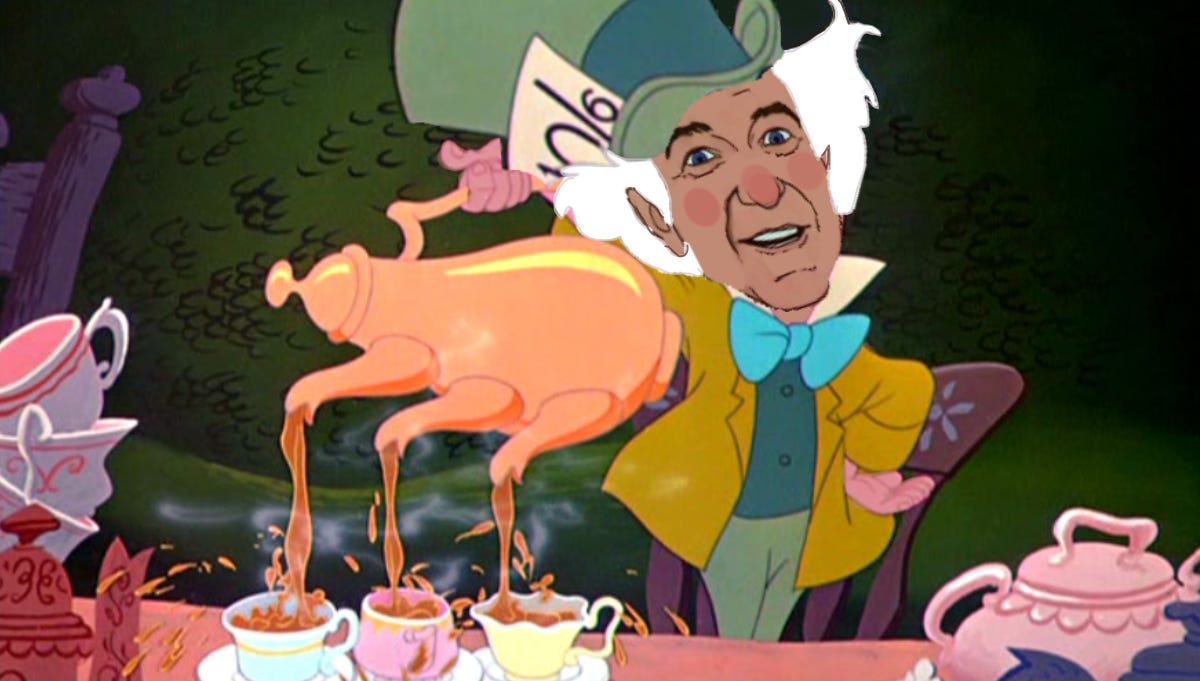
In a long exit interview, the outgoing Disney boss talked about firing his hand-picked successor, the Apple merger talks that fizzled, surviving Covid, and why his big comeback was “much less fun.” Here’s what went down behind the curtain.
Bob Iger is finally leaving Disney, for real this time, and on his way out he sat down for a long exit interview and talked about almost everything.
Twenty years running the company. Two stints as CEO. A messy handoff that blew up in his face. Giant deals that almost happened and deals that didn’t. He covered it all.
Here’s the behind-the-scenes story of the last two decades, in his own words.
The handoff that blew up
The drama starts with how Iger tried to leave the first time, back in 2020.
His plan sounded smart on paper. He’d step down as CEO and hand the daily job to parks boss Bob Chapek, but stay on as executive chairman and keep control of the creative side. He’d seen a similar setup work elsewhere and figured it would work here.
Here’s the catch most people missed at the time. “Executive chairman” isn’t a polite retirement title. As Fortune explained, it’s actually a more powerful role than CEO. Chapek was even set up to report directly to Iger. So Iger never really handed over the keys.
He also kept his corner office, with its private shower. Chapek moved down the hall. Iger stayed the senior guy in the building, still calling the creative shots.
Iger defends it. “He was keeping the trains running on time,” he says of Chapek. “Why should I leave the office?” But he admits the setup caused friction fast. In his words, “it quickly went bad.”
These days Iger won’t even say Chapek’s name. He just calls him “my former successor.”
Covid made everything worse
Then the timing turned brutal.
Chapek took over in February 2020. A few weeks later, the pandemic hit. Disney’s theme parks were forced to close. The studios fell into chaos. Staff worked from home and customers stopped spending. It was about the worst possible moment to take the biggest job in entertainment.
The whole thing was so strangely timed that some people wondered, only half joking, whether Iger had seen the storm coming and bailed on purpose. He hadn’t. But the optics were wild: he stepped aside, and the roof caved in weeks later.
Josh D’Amaro, the current boss, lived through it as a parks executive and remembers it as the scariest stretch of his career. People genuinely wondered if the company would survive. By the end of 2021, Iger left entirely. By then, he and Chapek were barely speaking.
The coup and the comeback
Chapek’s solo run was short and rocky.
The money and the mood both slipped. He made some unpopular calls. And there are two versions of what happened next, which is where it gets juicy.
One version, told by people close to Chapek, is that Iger worked the board from the outside, quietly angling to get his old job back. Iger flatly denies it. He says the idea that he was “fomenting” to undermine Chapek is “completely untrue.”
He doesn’t hide that he disagreed with how Chapek ran things, though. “There was no urgent need to make drastic changes,” Iger says. “And yet he did, and he brought in bureaucracy, and he brought in layers of management.”
Either way, the end came fast. Iger notes the exact timing himself: less than a year after he left, Chapek was fired in a boardroom shake-up. He didn’t even get time to send a goodbye email.
Iger’s return was just as sudden. He got a call one Friday from Disney’s chair. He turned to his wife, Willow, and asked what to do. Her answer, in his telling: “You have to say yes.” By Monday he was back in the office. The staff had even put his old desk back exactly where it used to be.
Round two was no fun
Iger is honest that the comeback wasn’t the fun part.
His first run, from 2005 on, was all swagger. He spent around $90 billion buying Pixar, Marvel, Star Wars, and Fox, stuffing Disney with the biggest names in movies. Revenues tripled. The stock soared.
The second run was about survival. He cut $6 billion in costs and around 7,000 jobs, undid Chapek’s changes, and tried to steady a company he describes as being in “perpetual crisis.” He says the mess he came back to was worse than the one he found in 2005. He doesn’t pretend he enjoyed it.
The deals that almost happened
Here’s the part Disney fans will love: the giant deals that got away.
Iger says Disney came close to buying Twitter from Jack Dorsey at what he calls “a very attractive price,” planning to use it to beam Disney content worldwide. He backed out the morning it was supposed to close, worried it would be “a distraction.” Given how Twitter turned out, that one aged well.
The bigger one is Apple. Iger has hinted for years that Disney and Apple might have merged if his friend Steve Jobs had lived. Now he goes further and admits the two sides actually talked.
“We talked about it internally,” he says, “and we had some conversations with Apple about it, but it never went anywhere.” Why not? Iger just shrugs: “Apple didn’t show that much interest.”
There’s more. Disney chased the James Bond franchise too, going after it on the same shopping list as Marvel and Star Wars. Bond was the one that got away, and it’s now controlled by Amazon. Disney also came close to buying BuzzFeed, but founder Jonah Peretti didn’t want to give up control of his company, so that one died too.
The fights he’s still nursing
Not everything is settled, and a couple of bruises are still fresh.
Activist investor Nelson Peltz went after Disney in 2023, saying the company had lost its way and demanding better streaming profits. Iger fought him off in a shareholder vote in 2024, but it clearly still stings. “It was a little ugly,” he says.
Disney’s also been tangled in a public fight with the government over its ABC network and late-night host Jimmy Kimmel. Iger says the company’s decisions there weren’t about politics, and that one Kimmel suspension was about a joke in “bad taste.” That whole FCC fight is its own story, and an ongoing one.
What he thinks about AI
For all the worry about AI remaking entertainment, Iger sounds calm.
His take is simple. A great story told well will always find an audience, and a real artist will always beat a machine. As he puts it, “the artist is always going to have it over AI.”
He points to Mickey Mouse, drawn by hand almost 100 years ago and still going strong, as proof that the human touch is the thing that lasts.
Who is he without Disney?
The most human moment is the quietest one.
Iger has a license plate holder on his car that asks, “Is there life after Disney?” He’s about to find out. Come December he’s fully out, no title, no office, no assistant booking his dinners.
He admits he’s a little lost about it. “Who am I?” he asks at one point. He’s been the face of Disney so long that the two got hard to tell apart.
And the first night of the rest of his life sounds pretty ordinary. The kids are grown, his wife will be out, and the man who spent $90 billion reshaping Hollywood has a simple plan for the empty house. “I’ll probably make a sandwich.”
Pirates and Princesses is your destination for Disney news, theme park updates, and the pop culture you love. From Disney cruises and travel tips to Disney fashion, food, collectibles, and movie news, PNP covers it all. Visit us at piratesandprincesses.net for daily coverage. Follow PNP on Facebook and Instagram, and listen to the Pirates & Princesses podcast on Apple Podcasts and YouTube.
Hat Tips:
Financial Times (June 20, 2026), Daniel Thomas reporting, the original exit interview and the source for Iger’s direct quotes, including “my former successor,” the bureaucracy criticism, his wife’s “you have to say yes,” the Apple and Twitter talks, the Peltz “a little ugly” comment, and the closing “I’ll probably make a sandwich”
The Hollywood Reporter (June 2026), which covered the FT interview, verified for the James Bond and BuzzFeed/Jonah Peretti near-deals and the Chapek “bureaucracy and layers of management” quote
Fortune (2026), verified for the executive-chairman structure outranking the CEO, Chapek reporting directly to Iger, and the Covid-timing context around the 2020 handoff