

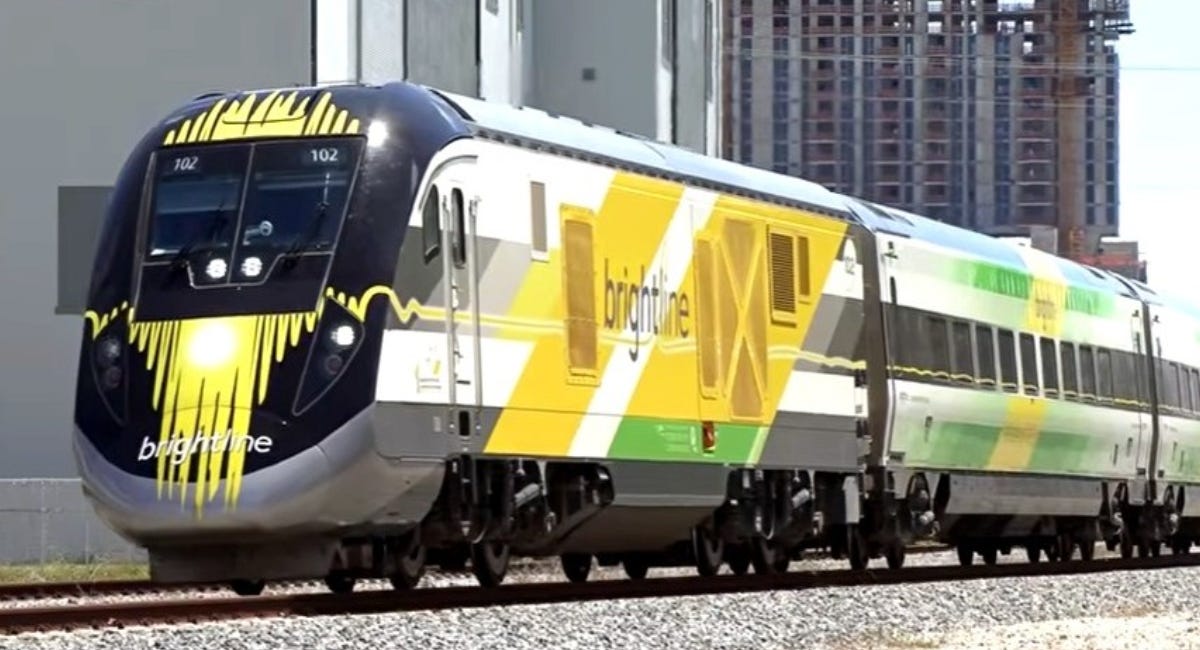
A bicyclist was struck and killed by a Brightline train in Fort Lauderdale on July 3, the latest death for a railroad that a year-long investigation named the deadliest in America per mile. Here’s what the data shows, why safety upgrades have lagged, and how it ties into the company’s finances.
Florida’s high-speed Brightline train has added another death to a grim and growing total. On the morning of July 3, 2026, a bicyclist was struck and killed while crossing the tracks in Fort Lauderdale, the latest fatality for what federal data and a major investigation have identified as “the deadliest passenger railroad in America.”
That’s not an insult, it’s a documented finding. As the death toll mounts and long-promised safety upgrades remain incomplete, serious questions continue to be raised about the company’s response, and how it all connects to Brightline’s shaky finances. Here’s a sober look at the record.
The latest death, and the pattern it fits
Let’s start with what happened Friday, and why it’s part of something larger.
According to CBS Miami, a bicyclist, identified by Fort Lauderdale police only as an adult male, was struck and killed by a Brightline train while attempting to cross the tracks at SR 84 on the morning of July 3.
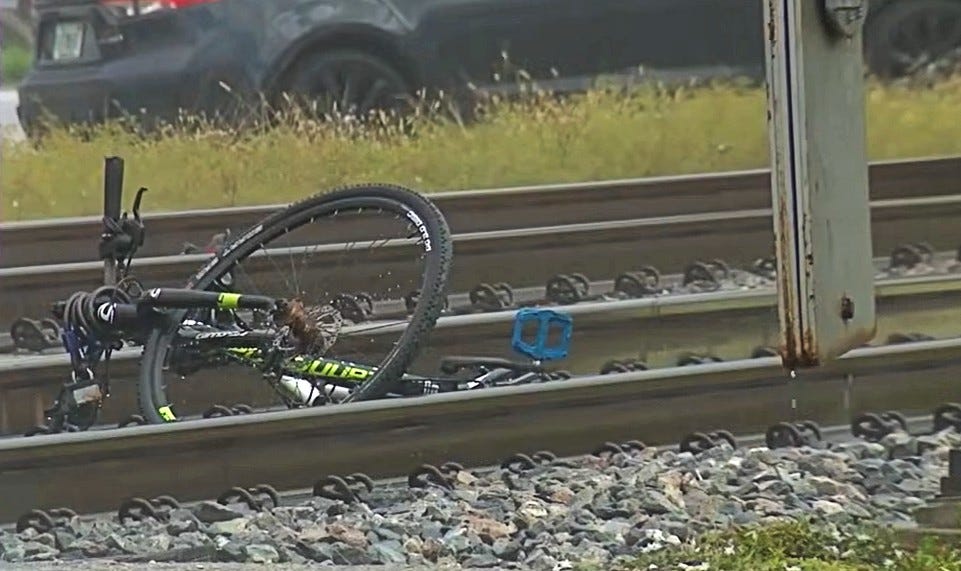
Police shut down the SR 84 westbound lanes during the investigation and urged drivers to seek alternate routes. As of the initial reports, authorities had not released the victim’s identity or the circumstances of the crash.
Tragically, it’s the kind of incident that has become all too familiar along this corridor, a pedestrian or cyclist killed at a street-level crossing. And it fits a pattern that data has made impossible to ignore.
What the data actually shows
Here are the numbers, because they’re stark and well-documented.
A year-long investigation by the Miami Herald and WLRN (South Florida’s NPR station), published in July 2025, combed through federal rail data, medical examiner records, and police reports to count every Brightline-related death since the line began testing in 2017. Their finding: 182 people killed by that point, more than had been publicly known. Brightline did not dispute the count.
The rate is what stands out. Brightline’s fatality rate is roughly 24.5 deaths per million miles traveled, according to the analysis, about three times higher than fellow Florida trains Tri-Rail and SunRail, nearly six times higher than Amtrak, and about 1.5 times worse than the next-deadliest passenger railroad in the country (San Diego’s Coaster). The Associated Press had already flagged Brightline as America’s deadliest railroad back in 2019, when the toll was 41.
And it hasn’t slowed. As of May 2026, the total number of people killed by Brightline trains surpassed 200, a figure that continues to climb with incidents like Friday’s.
Why the trains are so dangerous
Here’s the context behind the numbers, and it’s not simple.
Several factors combine to make this corridor deadly, and understanding them matters:
Speed through populated areas. Brightline trains can travel up to 125 mph, and run at 110 mph through some densely populated areas, far faster than the freight trains Floridians were used to on these tracks.
Street-level crossings. Because federal law only mandates full grade separation (elevated tracks) for trains exceeding 125 mph, and Brightline mostly stays at or below that, roughly 96% of its crossings are “at grade”, level with the street, and accessible to pedestrians and cyclists.
An old, dangerous corridor. Brightline runs largely on the century-old Florida East Coast Railway line, which cuts directly through urban centers and neighborhoods. This corridor was deadly long before Brightline; FEC freight trains killed 54 people in 2016 and 2017 alone, just before Brightline launched.
The accountability questions
Here’s the part that’s drawn the sharpest criticism.
The Miami Herald/WLRN investigation didn’t just count deaths, it examined Brightline’s response, and reached pointed conclusions. Reporters found the company “failed to urgently address the train’s dangers, blamed victims for the high death rate, and, as fatalities climbed, turned to the public to pay for safety upgrades.”
That last point is key. A roughly $45 million project to add 33 miles of protective fencing, better crossing markings, and 168 crisis-support signs was funded largely by federal and state money (Brightline’s share was about $10 million). But the federal funding was delayed for 33 months, and during that window, 101 people died. As of the most recent reporting, many of those safety upgrades still weren’t complete.
Brightline, for its part, has stated that more than half of the deaths were confirmed or suspected suicides, and has largely attributed fatalities to trespassing pedestrians and drivers who went around crossing gates. Notably, though, the Herald/WLRN team found Brightline’s suicide figure to be well above standard federal estimates for rail fatalities.
In fairness: it’s not entirely Brightline’s fault
Here’s the other side, because responsible reporting demands it.
Not everyone places all the blame on Brightline, and the critics of that framing make fair points. Jim Mathews, president of the Rail Passengers Association, cautioned that “it’s a little disingenuous to create the impression that this is all Brightline’s fault.”
His reasoning: Brightline didn’t build most of these century-old tracks, which were laid through dense neighborhoods long ago. Florida already had some of the nation’s highest rates of train “trespassing” deaths before Brightline existed. And the state consistently ranks among the worst in the U.S. for pedestrian fatalities of all kinds, with 771 pedestrians killed on Florida roads in 2023 alone. In that light, Brightline’s grim numbers are partly a symptom of a broader Florida safety problem, not solely a Brightline failure. Even Mathews, however, adds that a company “running a train through a neighborhood” should have proactively dealt with “the reality that there are humans there.”
How it ties to Brightline’s finances
Here’s the business dimension, and it’s real.
Safety and money are directly linked here. Brightline has estimated that comprehensive safety measures like fencing could cost around $200,000 per mile, an expense the company has suggested could strain its business. That reluctance to shoulder the full cost is part of why so much of the funding has come from taxpayers rather than Brightline itself.
And this lands on a company that’s already under financial pressure. Brightline has faced well-documented struggles with debt and profitability as it built out its expensive Miami-to-Orlando route. When a company is stretched thin financially, spending hundreds of thousands of dollars per mile on safety upgrades becomes a harder sell internally, even as the human cost mounts. It’s an uncomfortable intersection: the safety improvements that could save lives are expensive, and the company installing them is watching its bottom line.
Brightline’s safety record: what needs to change
The data is clear and undisputed: Brightline is the deadliest passenger railroad in America per mile, with a toll that’s now surpassed 200 lives and continues to climb, as Friday’s death in Fort Lauderdale grimly underscores. A rigorous, year-long investigation found the company was slow to act, quick to blame victims, and reliant on public money for fixes that remain incomplete years later.
At the same time, it’s fair to acknowledge that Brightline inherited a century-old, dangerous corridor in a state with a serious pedestrian-safety problem, this isn’t a challenge of its making alone. But that context doesn’t erase the accountability questions. Running fast trains through crowded neighborhoods carries a profound responsibility, and by most expert accounts, the safeguards haven’t kept pace with the danger.
Whether it’s federal funding delays, corporate cost-cutting, or a mix of both, the result is the same: people keep dying, and the fixes keep lagging. For a company hoping to expand passenger rail across America, closing that gap between danger and safety isn’t just an ethical obligation, it’s essential to its future.
This article discusses train-related deaths, including suicide. If you or someone you know is struggling, the 988 Suicide and Crisis Lifeline is available 24/7 by calling or texting 988.
Hat Tips:
CBS Miami (Ana Maria Soler) (July 3, 2026), verified for the latest incident (the bicyclist struck and killed while crossing the tracks at SR 84 in Fort Lauderdale on the morning of July 3, the SR 84 westbound lane closures, and the police statement that the victim’s identity and the circumstances had not yet been released)
Miami Herald and WLRN (”Killer Train” investigation) (July 2025), verified for the year-long investigation’s methodology and findings (182 deaths counted from 2017-2025, Brightline not disputing the count, the ~24.5-deaths-per-million-miles rate, the comparisons to Tri-Rail/SunRail/Amtrak/Coaster, the conclusion that Brightline “failed to urgently address the train’s dangers, blamed victims, and turned to the public to pay for safety upgrades,” and the $45 million safety project with 101 deaths during the 33-month funding delay)
Streetsblog USA, the Rail Passengers Association, Miami New Times, and the Associated Press (2019-2026), verified for the counterbalancing context (Jim Mathews’ “disingenuous to make this all Brightline’s fault” comments, the century-old FEC corridor, the 96%-at-grade crossings, the 125-mph grade-separation threshold, Florida’s 771 pedestrian roadway deaths in 2023), the death toll surpassing 200 as of May 2026, the AP’s original 2019 “deadliest railroad” designation, the ~$200,000-per-mile cost estimate, and Brightline’s position attributing deaths to suicides and trespassers