

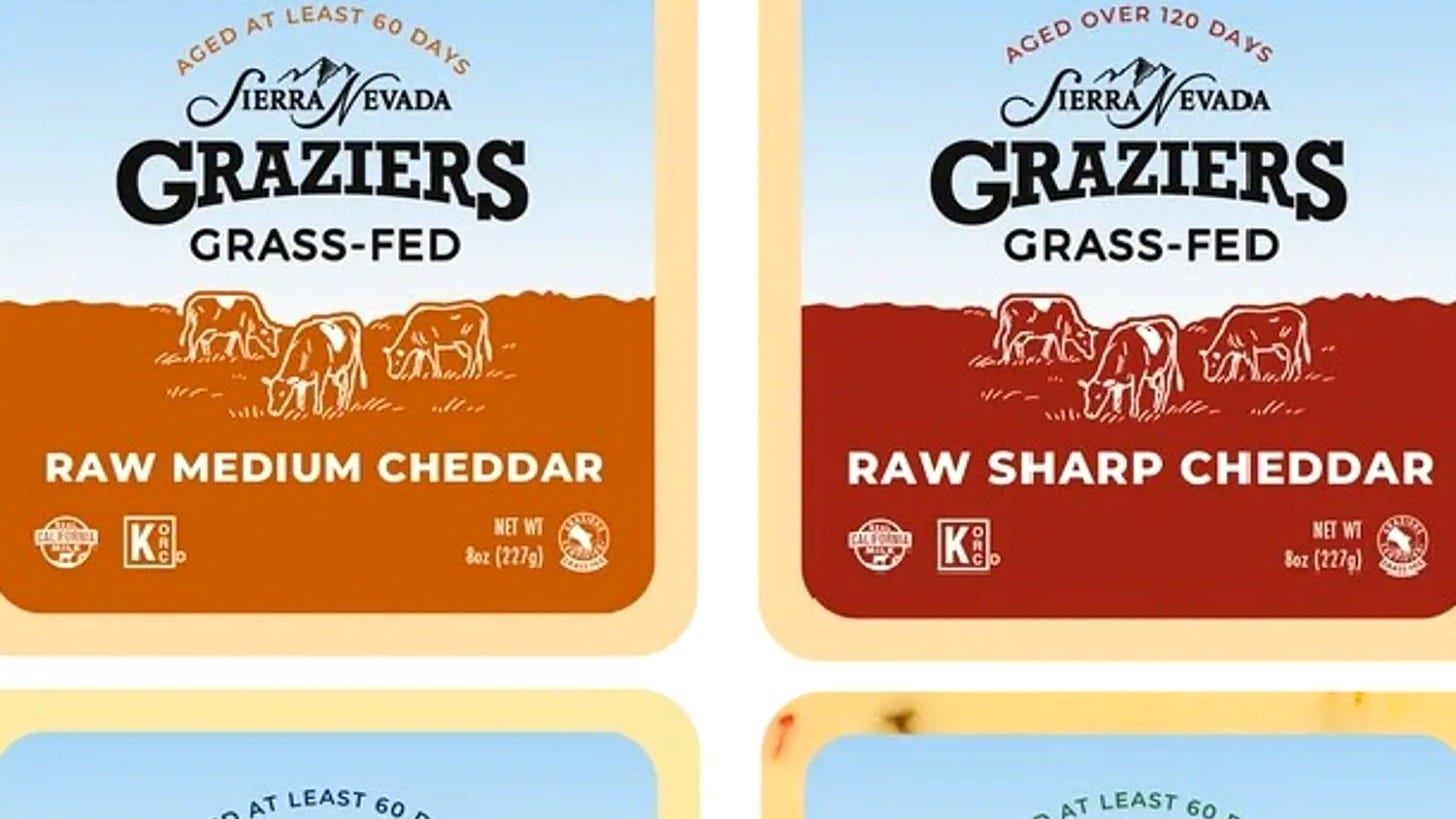
Sierra Nevada Cheese Company recalled all of its Graziers grass-fed raw milk cheeses after an E. coli outbreak sickened 13 people. Eight were hospitalized, and more than half are children 5 and under.
If you have Graziers cheese in your fridge, don’t eat it.
Sierra Nevada Cheese Company has recalled all of its Graziers grass-fed raw milk cheeses, per the Centers for Disease Control and Prevention. The cheeses are linked to an outbreak of E. coli O26 that has made 13 people sick in nine states.
Eight people were hospitalized, and three developed a serious kidney condition called hemolytic uremic syndrome, per the CDC. No deaths have been reported.
More than half of the people who got sick are children 5 and under.
Which cheeses are part of the Graziers recall?
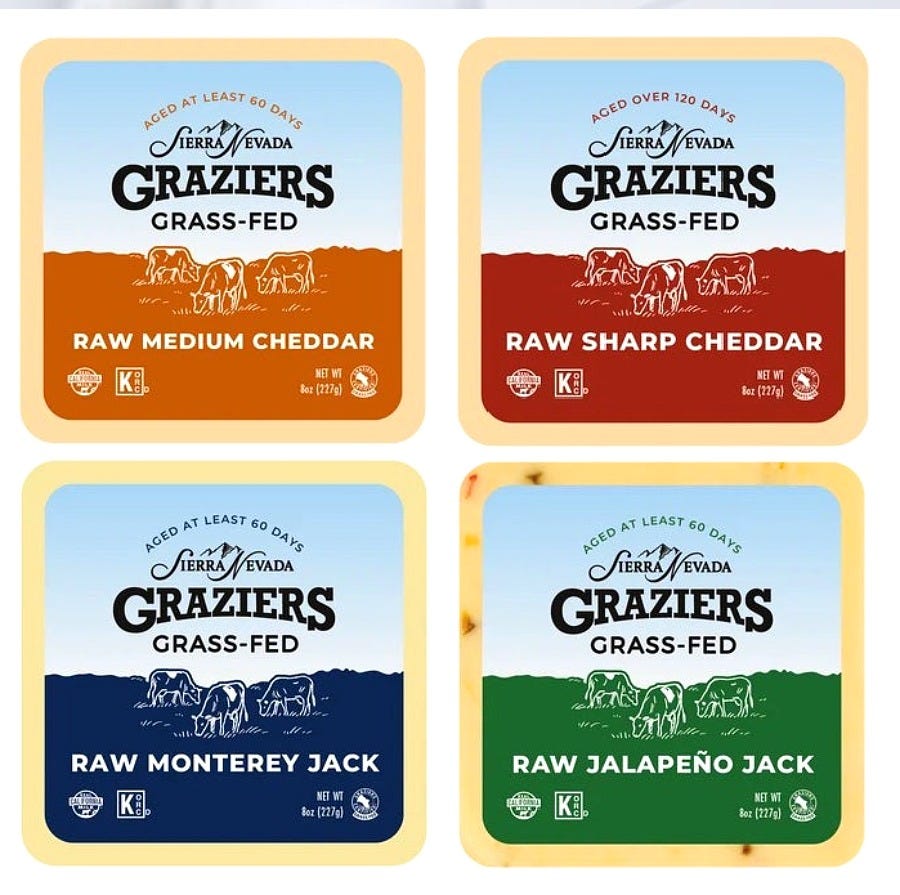
All Graziers grass-fed raw milk cheeses, per the CDC and ConsumerAffairs. That includes:
Medium cheddar
Sharp cheddar
Jalapeno jack
Monterey jack
They were sold in 8-ounce and 16-ounce retail packages.
Raw milk cheese is made from milk that hasn’t been pasteurized, the heating process that kills germs like E. coli. That’s why health officials keep warning families with young kids to stick with pasteurized dairy.
Which states are in the cheese E. coli outbreak?
People got sick in California, Colorado, Georgia, Kentucky, Michigan, Nevada, Oregon, Tennessee and Utah, per ConsumerAffairs.
That’s where the illnesses were reported, not necessarily everywhere the cheese was sold. If you bought Graziers cheese anywhere, check it.
What should you do with recalled Graziers cheese?
Look for the Graziers name on the label. The recall covers every Graziers grass-fed raw milk cheese, so you don’t need to match a lot number or date.
Don’t eat it. Throw it away, or return it to the store for a refund, per the FDA via ConsumerAffairs.
Cheese lasts a long time, so check your freezer too, not just the fridge, the FDA said. Then clean any shelves, drawers, cutting boards or containers that touched it.
If you or your child ate the cheese and feel sick, call a doctor. Tell them about the cheese, since that can help with testing and treatment.
What are the symptoms of E. coli?
Symptoms usually include severe stomach cramps, diarrhea that can be bloody, and vomiting, per ConsumerAffairs. They can start a few days after eating contaminated food, or as long as nine days later.
Most people get better within about a week. But some, especially young kids and older adults, can develop hemolytic uremic syndrome, or HUS, a type of kidney failure. Warning signs include peeing less than usual, feeling very tired and losing color in the cheeks and inside the lower eyelids.
HUS is a medical emergency. If you see those signs, get care right away.
When was the Graziers cheese recall announced?
The CDC posted its outbreak notice on Sept. 25, 2026, and last updated it on Sept. 29, per the CDC’s outbreak page.
Outbreak counts often go up as more test results come in. The CDC will update its page if more illnesses are linked to the cheese.
Is raw milk cheese safe to eat?
It carries more risk than pasteurized cheese, according to health officials.
The CDC and FDA recommend choosing pasteurized milk and dairy products, especially for children under 5, pregnant women, older adults and anyone with a weakened immune system. Those are the groups most likely to get seriously sick from germs like E. coli and listeria.
Some aged raw milk cheeses are legal to sell in the U.S., and plenty of people eat them. If you’re feeding small kids, check the label for the word “pasteurized” before it goes on a sandwich.
Article compiled with the help of the Pirates & Princesses newsroom.
Pirates and Princesses is your destination for Disney news, theme park updates, and the pop culture you love. From Disney cruises and travel tips to Disney fashion, food, collectibles, and movie news, PNP covers it all. Visit us at piratesandprincesses.net for daily coverage. Follow PNP on Facebook and Instagram, and listen to the Pirates & Princesses podcast on Apple Podcasts and YouTube.
Hat Tips:
Centers for Disease Control and Prevention (Sept. 25, 2026, updated Sept. 29), outbreak strain, case count, hospitalizations, HUS cases, children affected and recalled products
ConsumerAffairs (Sept. 29, 2026), product sizes, the nine states, FDA advice and symptoms
AI Disclosure: All articles are assigned, edited and reviewed by an experienced human editor before posting. Like most modern newsrooms, WebReef Media uses a variety of AI tools to help with accuracy and efficiency. Ways AI may be used in article creation include research, grammar, fact-checking and ideation, as well as occasional AI generated or enhanced thumbnails or graphics. No articles are generated or posted without human oversight or involvement.