

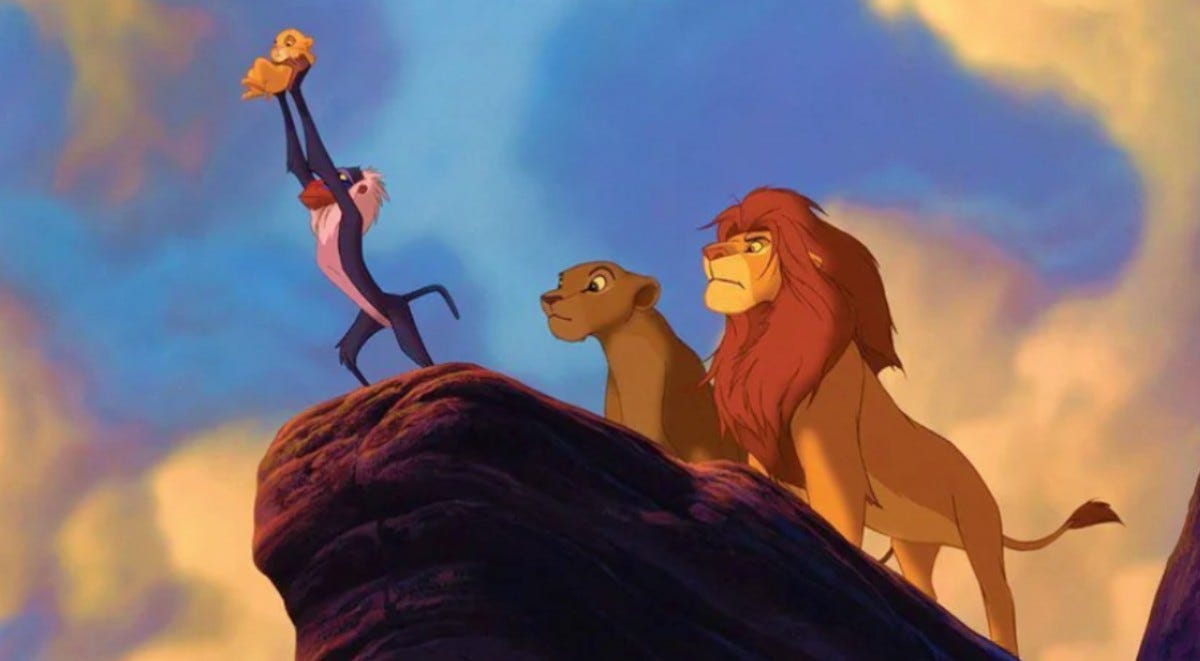
A federal judge ordered Lebohang Morake, creator of The Lion King’s opening chant, to pay comedian Learnmore Mwanyenyeka’s legal fees. Morake sued over a joke about what the lyrics mean, then dropped the case. The comedian’s lawyers had only charged him $5,350.
A comedian made a joke about what the opening of The Lion King means. It cost the man who wrote that opening nearly forty thousand dollars.
On August 28, U.S. District Judge Josephine L. Staton ordered Lebohang Morake to pay $39,560 in attorneys’ fees to Learnmore Mwanyenyeka, the comedian he had sued five months earlier.
Morake, known professionally as Lebo M, is the creator and original performer of “Nants’ingonyama bagithi Baba,” the chant that opens the film.
The joke that started it
Mwanyenyeka went on a podcast and said the chant translates from Zulu as “Look, there’s a lion. Oh my god.”
The clip hit YouTube and went viral. He kept doing the bit at comedy clubs.
Morake said that was wrong. His position, per the complaint, is that the correct translation is “All hail the king, we all bow in the presence of the king.”
He sued in March
On March 16, 2026, Morake filed four claims in the Central District of California: misleading representation under the Lanham Act, defamation per se, trade libel, and tortious interference with prospective economic advantage.
All of it centered on what the court order calls Mwanyenyeka’s “mischaracterization of the true meaning” of the chant.
The comedian fired back with an anti-SLAPP motion
On May 5, Mwanyenyeka moved to strike under California’s anti-SLAPP statute, arguing the First Amendment barred every state law claim against him.
Anti-SLAPP laws exist to kill lawsuits designed to punish protected speech. They come with teeth: a defendant who wins one is entitled to mandatory attorneys’ fees.
His lawyers had tried to head it off first, sending a meet-and-confer letter on March 31, a follow-up email April 3, and holding a phone call April 20.
Then the lawsuit changed shape
Morake never filed an opposition.
Instead, the parties agreed to extend his deadline, and on June 8 he filed an amended complaint that looked nothing like the first one.
Gone were all the allegations about the translation. Gone were the defamation and trade libel claims. What remained were two federal claims about Mwanyenyeka’s online storefront, which sells an “It’s a Lion” line of apparel, and whether shoppers might think Morake was involved with it.
The court denied the anti-SLAPP motion as moot, since the complaint it targeted no longer existed.
Mwanyenyeka moved to dismiss the new version on June 22. Shortly after, both sides agreed to drop the case entirely.
The judge said the comedian still won
Morake argued his opponent couldn’t collect fees on a motion that never got a hearing and was ruled moot.
Staton disagreed, citing California case law giving courts discretion to award fees when a plaintiff amends or dismisses to dodge an anti-SLAPP motion.
She quoted the standard directly: “Since the defendant’s goal is to make the plaintiff go away with its tail between its legs, ordinarily the prevailing party will be the defendant.”
Her conclusion was that the anti-SLAPP motion “successfully prompted Plaintiff to drop his state law claims and related allegations.” Morake offered no other explanation for why he abandoned them.
Two other arguments failed too. Staton rejected a jurisdictional challenge because federal claims were pled from the start, and dismissed the point that Mwanyenyeka had raised money on GoFundMe, noting that outside funding doesn’t affect who can recover fees.
His lawyers had only charged him $5,350
Mwanyenyeka’s counsel submitted a spreadsheet totaling $45,935. Mr. Sullivan, a partner with about 26 years of experience, logged 28.1 hours at $850 an hour. Mr. Hansen, an associate with roughly six years in, logged 33 hours at $475.
The court caught an error where some of Hansen’s work had been billed at the partner rate and adjusted the total down to $39,560.
But the firm had actually invoiced their client only $5,350, taking the case at steeply reduced rates “because of the importance of [Defendant’s] First Amendment Rights,” per the order.
That didn’t matter. Staton cited Ninth Circuit precedent holding that attorneys working pro bono or at a discount recover fees at the same rate as anyone else. So the award came to more than seven times what Mwanyenyeka was ever billed.
His lawyers did ask for a fee enhancement of at least triple the amount. Staton declined, finding no reason the case required exceptional skill.
Disney was not involved in any of this
Disney was not a party to this lawsuit and had no role in it. Morake sued as an individual over his own creative work, and the case was between two people.
Morake has been ordered to submit a proposed judgment within five days.
A joke about six words of Zulu, told on a podcast, ended with a federal judge quoting a phrase about tails between legs. Somewhere there is a lesson about which fights are worth picking.
Article compiled with the help of the Pirates & Princesses newsroom.
Pirates and Princesses is your destination for Disney news, theme park updates, and the pop culture you love. From Disney cruises and travel tips to Disney fashion, food, collectibles, and movie news, PNP covers it all. Visit us at piratesandprincesses.net for daily coverage. Follow PNP on Facebook and Instagram, and listen to the Pirates & Princesses podcast on Apple Podcasts and YouTube.
Hat Tips:
U.S. District Court, Central District of California (August 28, 2026), the order granting attorneys’ fees in Morake v. Mwanyenyeka, Case No. 2:26-cv-02795-JLS-AS, including the case history, the fee calculation, the $5,350 actual billing, and Judge Staton’s reasoning
Billboard (August 2026), the reporting that surfaced this ruling