

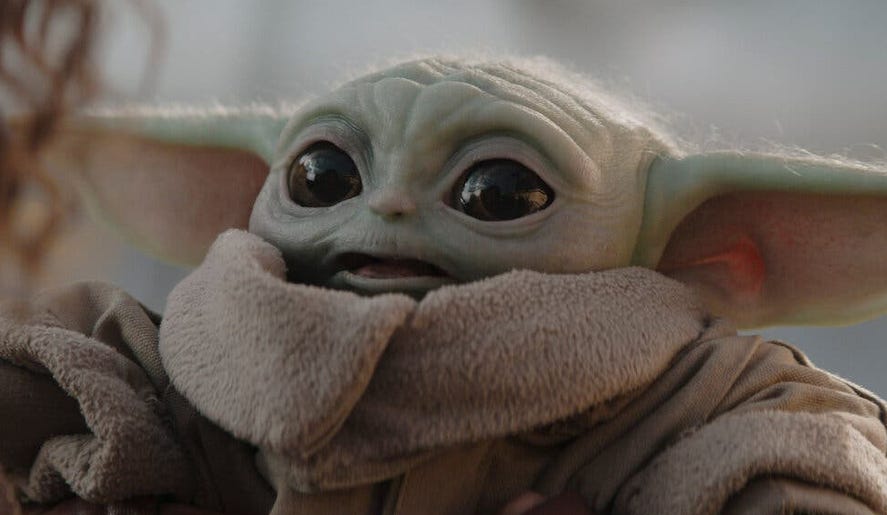
On its earnings call, Disney acknowledged the first Star Wars movie in seven years underperformed, then quickly pivoted to the parks, retail, and streaming value it created instead. It made about $345 million worldwide against a break-even point closer to $600 million.
Disney has finally said out loud what the box office made obvious back in June. The Mandalorian and Grogu was a disappointment.
Then, in the same breath, the company explained why that supposedly doesn’t count.
What Disney actually said
On its latest earnings call, Disney grouped The Mandalorian and Grogu with the live-action Moana as theatrical letdowns. The admission was real. The framing around it was pure damage control.
Parks and experiences chief Josh D’Amaro did the pivoting. The film, he said, “drove healthy growth in retail sales for the Star Wars franchise,” pulled guests toward the updated Millennium Falcon attraction at Disneyland and Walt Disney World, and “led to significant engagement in gaming as well.”
Disney’s earnings release put it more bluntly: these investments “contributed to value creation beyond their theatrical releases.”
CFO Hugh Johnston made the case directly. “The nature of the film industry is such that it is more of a portfolio game,” he said, adding that the theatrical window “is just one data point” and the real value is folding the IP “into the entirety of the Disney flywheel.”
Translation: the movie lost money, but Star Wars sells a lot of spaceship toys.
The numbers behind the shrug
Here’s what “disappointing” means in dollars.
The Mandalorian and Grogu opened over Memorial Day weekend to roughly $81 million domestically, the softest debut of any Disney-era Star Wars film. It dropped nearly 70% in its second weekend, fell out of the top five by its third, and limped to about $345 million worldwide.
Against a production budget around $165 million, and with marketing on top, insiders told The Hollywood Reporter the film needed somewhere between $500 and $600 million globally just to break even.
It didn’t come close.
This was also the first Star Wars movie in seven years, since 2019’s The Rise of Skywalker, and where that film and The Last Jedi cleared a billion dollars each, this one didn’t reach $350 million.
The stat Disney would rather you forget
There’s one comparison that no amount of flywheel talk smooths over.
The Mandalorian and Grogu got beaten at the domestic box office by Obsession, an indie horror film made for around $750,000. A movie that cost less than a nice house outgrossed a Star Wars picture that cost $165 million. Another low-budget horror release, Backrooms, did the same.
Whatever theatrical magic the Star Wars name used to carry, a $750,000 horror flick just borrowed it for the summer.
Why the safe bet wasn’t safe
The frustrating part for Disney is that this was supposed to be the easy one.
The Mandalorian and Grogu had everything a nervous studio wants. Beloved characters. Baby Yoda. A family-friendly PG rating. Jon Favreau, the guy who made the Disney+ show a phenomenon, back in the director’s chair. If any Star Wars movie was going to bring audiences back to theaters, it was this one.
And that turned out to be the problem. Mando and Grogu got famous as a show people watched free on Disney+. Asking those same fans to buy tickets for a continuation of something they stream at home from the couch was a much harder sell than Disney assumed. The streaming-to-theatrical pipeline the company was counting on ran backward.
Is Disney’s spin actually fair?
To give the flywheel argument its due, it holds up more than the mockery suggests.
Star Wars genuinely does generate enormous value outside of ticket sales. Galaxy’s Edge and the Falcon ride pull real park revenue. The merchandise moves. The characters feed streaming subscriptions and games and decades of future storytelling. A Star Wars movie is worth more to Disney than its opening weekend, and that’s true.
But “value beyond the theatrical release” is also exactly the phrase a company reaches for when the theatrical release flopped. Both things are true at once, and Disney is loudly emphasizing the half that sounds better.
What it means going forward
The stakes are bigger than one movie, because Disney has a lot more Star Wars coming. A film centered on Daisy Ridley’s Rey, Ryan Gosling’s Starfighter, James Mangold’s origin story, all headed to theaters.
If the friendliest, safest, most beloved-character-driven Star Wars movie in years can’t get past $350 million, every one of those bets gets riskier.
The flywheel can absorb a single theatrical loss without blinking. It can’t become the entire plan.
Disney can call it a portfolio play as many times as it likes. A three-quarter-million-dollar horror movie outgrossed Star Wars this year, and no update to the Millennium Falcon gift shop turns that into good news.
Article compiled with the help of the Pirates & Princesses newsroom.
Pirates and Princesses is your destination for Disney news, theme park updates, and the pop culture you love. From Disney cruises and travel tips to Disney fashion, food, collectibles, and movie news, PNP covers it all. Visit us at piratesandprincesses.net for daily coverage. Follow PNP on Facebook and Instagram, and listen to the Pirates & Princesses podcast on Apple Podcasts and YouTube.
Hat Tips:
Variety — Disney’s earnings-call comments, D’Amaro’s retail-and-parks framing, Hugh Johnston’s “portfolio game” quote, and the $345M worldwide total
Forbes (Tim Lammers) / Yahoo — the ~$81M opening, the 70% second-weekend drop, the top-five fall, and the $500–600M break-even estimate
The Hollywood Reporter — the pre-release insider expectations and the break-even reporting
BamSmackPow / WFMD — Obsession and Backrooms outgrossing the film domestically, and their $750K and $10M budgets