

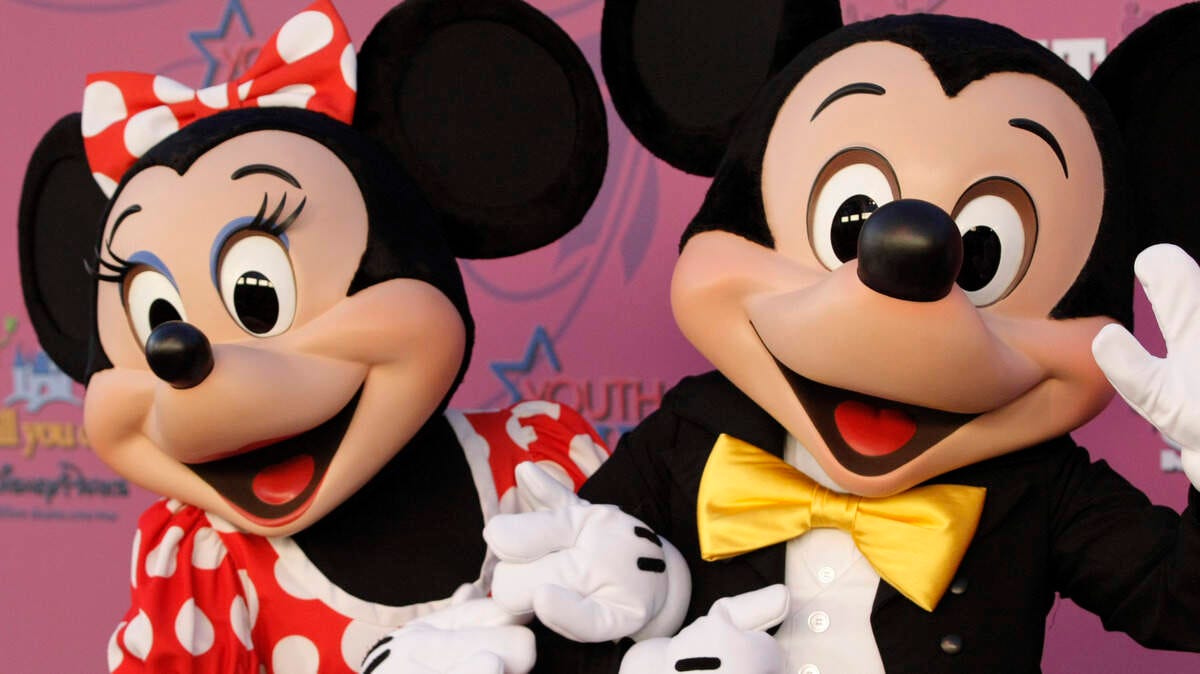
A new Disney patent describes an AI system that writes and speaks replies in a character’s own voice during meet-and-greets, with the performer’s face setting the mood.
Imagine asking Mickey a question at a meet-and-greet, and Mickey actually answers. Out loud. In his own voice. With a joke that fits what you just said.
That’s the idea behind a Disney patent granted on Tuesday, Nov. 3. BlogMickey, WDWNT and Disney Dining all reported that the U.S. Patent and Trademark Office signed off on an AI system that would let costumed characters hold real-time conversations with guests.
Disney filed the application in May 2024. It’s titled “Artificial Intelligence Based Character-Specific Speech Generation,” and the inventors are Alif Khalfan and Malcolm E. Murdock, according to the public application on Google Patents.
How would Disney’s AI character voice system work?
It’s a few pieces stacked together. Microphones pick up what a guest says, and the system turns that into text. It also listens for how the guest says it, like stress and rhythm, which the patent calls prosody.
Then it pulls up a profile for the character. That profile can include the character’s archetype, like hero, villain or sidekick, plus its typical way of talking, favorite words and catchphrases.
A language model writes the reply. The application says it “may be an LLM,” the same kind of tech behind chatbots. A separate AI voice model then speaks the line in the character’s voice, through speakers built into the costume.
The application describes the system as using “a character database, a language model and an artificial intelligence (AI) model trained to emulate speech by a character.”
Why does the performer’s face matter?
This is the clever part. The costume would include “an inward facing camera, such as a ‘selfie’ type camera,” according to the application. It watches the face of the performer inside the costume.
If the performer smiles, the character’s voice sounds happy. A smirk reads as smug. A frown reads as disappointed. So the person in the suit still steers the emotion, even if the AI writes the words.
The patent also mentions optional extras, per BlogMickey and the application. Those include motors that move the costume’s face, context like time of day or weather, and a running history of the conversation, preferably without personal information. It allows for a human reviewing the lines, or fully automatic operation.
Why can’t costumed characters just talk now?
Mostly to protect the character. Many performers can’t use their own voices because Disney wants to “avoid inconsistency, incongruity and brand dilution,” the application says. One Mickey can’t sound different from the next.
Pre-recorded lines are a workaround, but the filing says guests see those interactions as “lacking spontaneity and immersiveness.” Anyone who has heard the same three phrases from a theme park character on a loop probably agrees.
Disney has tried talking characters before. Magic Kingdom’s Talking Mickey at Town Square Theater could chat with guests until 2018, when WDWNT reported he went quiet. Talking Dug returned at Animal Kingdom in April 2026, though WDWNT says he uses pre-recorded phrases.
Is Disney putting AI characters in the parks?
No one has announced that. A patent protects an idea. It doesn’t mean Disney will build it, and none of the outlets that covered it got a comment from Disney or a timeline. Disney Dining notes the patent doesn’t name any specific characters.
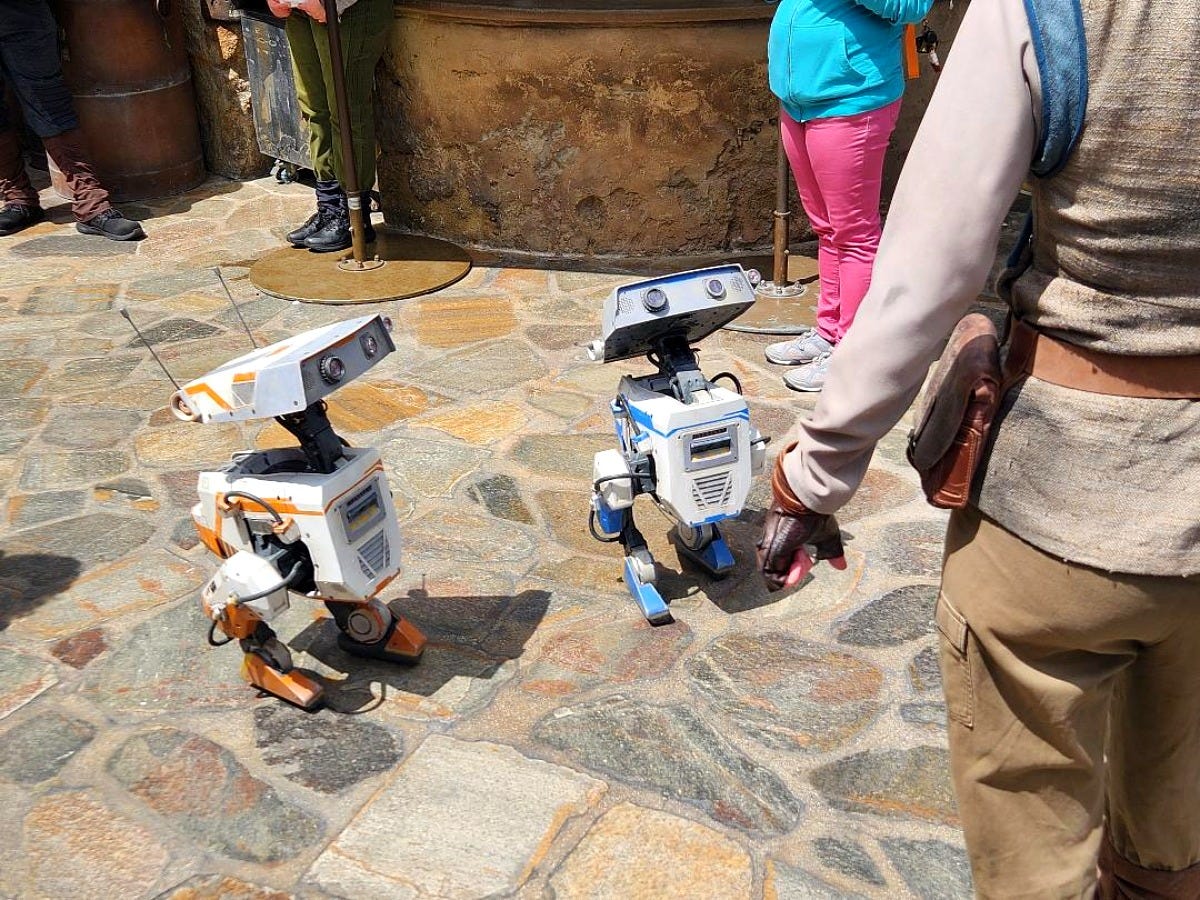
Still, Disney has been busy on the tech side. Walt Disney Imagineering built a self-walking robotic Olaf that debuted at Disneyland Paris in March 2026, per Disney. The company’s roaming BDX droids showed up at Star Wars: Galaxy’s Edge in 2025.
BlogMickey also flagged a September filing for an AI camera system that could send animal-spotting alerts to guests on safari. And in December 2025, Disney announced a $1 billion investment in OpenAI, licensing more than 200 of its characters for the Sora video app.
What is the Disney AI patent number?
The granted patent is US 12,784,732 B2, according to the fan site Mickey From The UK, which reported 19 claims. The earlier published application is US 2025/0356839 A1, from Nov. 20, 2025.
The quotes in this story come from that published application. The final granted claims may be worded a bit differently.
So no, Goofy isn’t about to start a philosophy debate with your kids at the next character breakfast. But if this ever reaches a meet-and-greet line, the first guest to ask Stitch a follow-up question is going to have quite a story.
Article compiled and written by Kambrea Pratt (editor-in-chief), Derek Gibbs (beat editor) and the Pirates & Princesses newsroom. Pirates & Princesses is part of WebReef Media.
Pirates and Princesses is your destination for Disney news, theme park updates, and the pop culture you love. From Disney cruises and travel tips to Disney fashion, food, collectibles, and movie news, PNP covers it all. Visit us at piratesandprincesses.net for daily coverage. Follow PNP on Facebook and Instagram, and listen to the Pirates & Princesses podcast on Apple Podcasts and YouTube.
Hat Tips:
BlogMickey (Nov. 3, 2026), first report of the granted patent and how it works
WDWNT (Nov. 3, 2026), patent details, Talking Mickey and Talking Dug
Disney Dining (Nov. 3, 2026), no named characters or timeline
Google Patents, application US 2025/0356839 A1 and its quotes
Mickey From The UK (Nov. 3, 2026), granted patent number and claims
Disney Experiences, robotic Olaf at Disneyland Paris
AI Disclosure: All articles are assigned, edited and reviewed by an experienced human editor before posting. Like most modern newsrooms, WebReef Media uses a variety of AI tools to help with accuracy and efficiency. Ways AI may be used in article creation include research, grammar, fact-checking and ideation, as well as occasional AI generated or enhanced thumbnails or graphics. No articles are generated or posted without human oversight or involvement.