

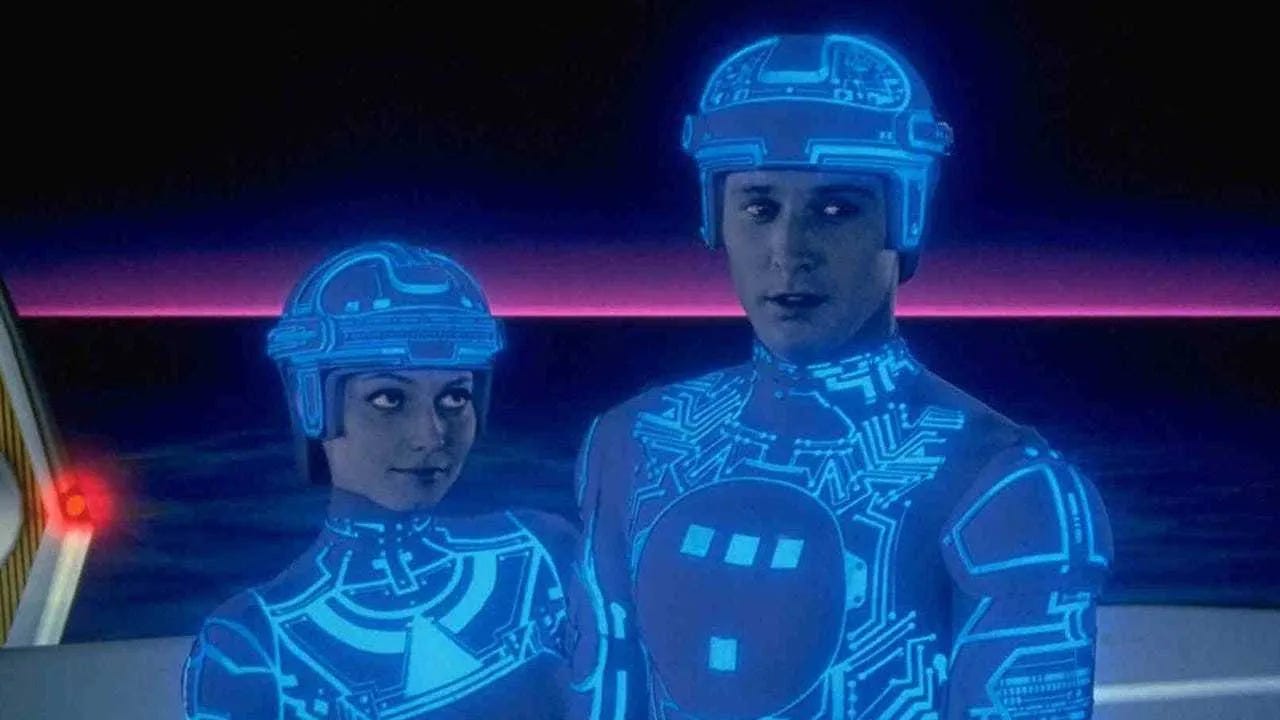
Disney’s de-canonization of the 2003 video game Tron 2.0—developed by Monolith Productions as the official sequel to the 1982 sci-fi pioneer Tron—exposes the franchise’s splintered timeline, igniting speculation on how a potential Tron 4 could weave its elements back in for a grand send-off. The debate resurfaces as Tron: Ares opens to a modest $33.5 million domestically on October 11, 2025.
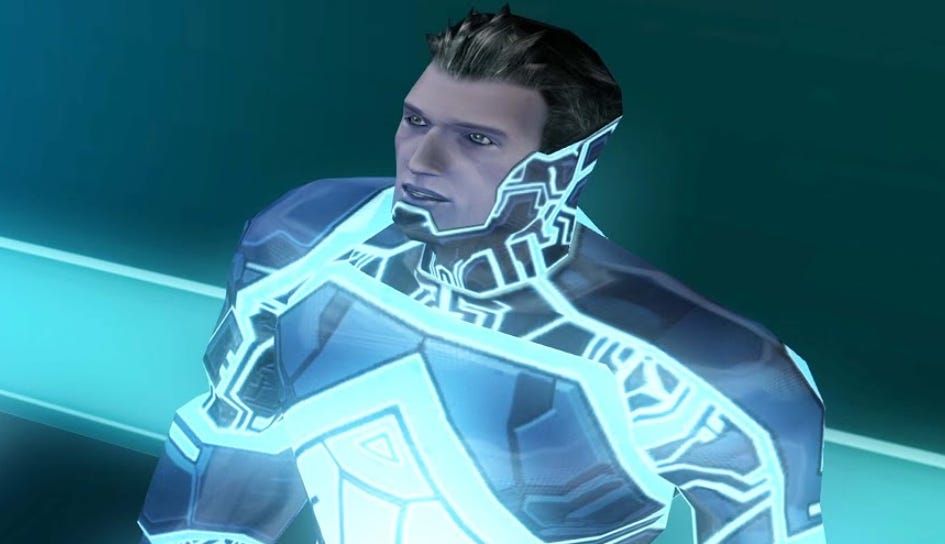
The Tron saga, a groundbreaking blend of digital imagery and cyberpunk vision, has long straddled film, gaming, and television. Yet Tron 2.0’s sidelining remains one of its most puzzling canon breaks. Created with Steven Lisberger’s blessing and voiced by Bruce Boxleitner, the game extended the story between the Master Control Program’s defeat and the next digital age. But when Tron: Legacy rebooted the Grid, Disney erased 2.0’s continuity. Now, with Ares bringing in $60.5 million globally but earning mixed reviews (6.5/10 IMDb), fans are wondering: could Tron 4 finally restore the deleted code?
Here’s the TLDR...
The Lost Sequel: Tron 2.0 launched on August 26, 2003 (Mac: April 21, 2004), serving as Disney’s first direct continuation of Tron—canon until Legacy’s 2010 retcon.
Development Pedigree: Developed by Monolith (F.E.A.R.), with a ~$5M budget under Buena Vista; Bruce Boxleitner reprised Alan, and Lisberger ensured lore accuracy.
Story Connective Tissue: Jet Bradley fights the fCon corporation and its Ma3a virus in a post-MCP Grid. Sold ~500K copies and inspired comics and a novella.
Decanon Drama: Legacy ignored 2.0’s storylines, with Lisberger confirming in Wired (2010) that Disney opted for “a cleaner path.”
Tron 4 Speculation: Fans predict a multiverse link between 2.0’s virus and Ares’ AI, reuniting Sam Flynn and Jet Bradley for a true TRON finale.
Birth of a Digital Ghost: Tron 2.0’s Development and Pedigree
In the early 2000s, Tron’s cult status inspired Disney to commission a full-fledged sequel outside theaters. Developed by Monolith Productions—creators of No One Lives Forever—and published by Buena Vista Interactive, Tron 2.0 launched on August 26, 2003, for PC and later for Mac. Built on the studio’s proprietary LithTech engine, it combined first-person action with RPG systems, introducing light cycle combat, “permission bit” upgrades, and richly rendered cyberscapes.
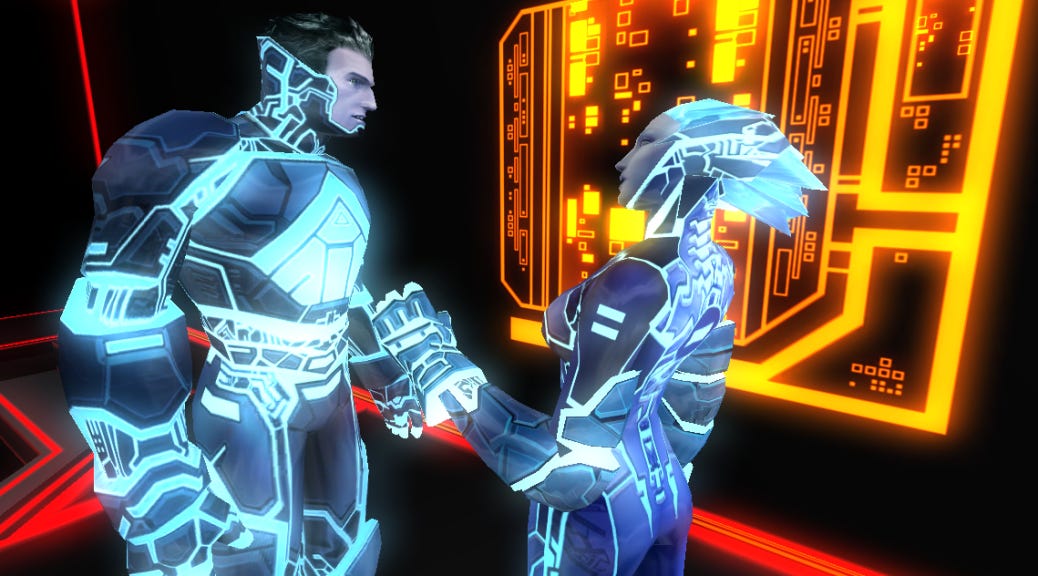
With an estimated $5 million budget, Tron 2.0 became a critical success, scoring 82/100 on Metacritic for “story depth and design innovation.” It sold roughly 500,000 units (VGChartz) and spawned a WildStorm comic tie-in and a novella, Somebody’s Watching Me? Creator Steven Lisberger described it as “the natural evolution of Tron,” while Boxleitner’s return as Alan Bradley gave the sequel emotional weight. “We aimed to honor the movie’s spirit while pushing boundaries,” Monolith’s Randy Busk told IGN in 2003.
Threads in the Grid: Story and Ties to the Original
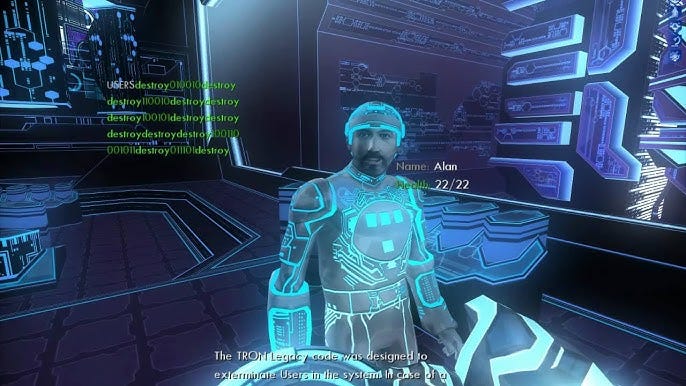
Set two decades after the 1982 film, Tron 2.0 follows Jet Bradley, son of Alan (voiced again by Boxleitner), who is digitized into ENCOM’s network to fight the corporate rival fCon and its AI virus, Ma3a. The game’s cyber-noir tone and lore-rich design expanded the universe beyond the MCP era, featuring references to Flynn, ENCOM, and the evolution of the digital Grid.
Jet’s alliance with a fragmented Tron forms the emotional core, culminating in another self-sacrifice that leaves Tron’s code scattered. Thematically, it mirrored humanity’s dependence on technology, with Ma3a’s pursuit of “perfection” foreshadowing Legacy’s Clu storyline.
The Derezz: How Tron: Legacy Erased the Game’s Canon
When Tron: Legacy arrived in 2010, Disney rebooted the series entirely. The sequel ignored Jet Bradley, reframed the Grid as Flynn’s experiment, and replaced Tron’s corruption arc with the Rinzler subplot. Tron 2.0’s virus lore, corporate espionage, and ENCOM intrigue vanished.
Disney formally labeled Tron 2.0 non-canon, according to Tron Wiki and TV Tropes. Lisberger explained to Wired that Legacy “needed its own bold foundation.” Director Joseph Kosinski told Empire the film would “stand alone.” The result was a reset: Tron: Uprising (2012–2013) became the canonical bridge between Tron and Legacy, while 2.0 was sidelined as “alternate continuity.”
Lingering Code: Could Tron 2.0 Sync with Uprising, Legacy, and Ares?
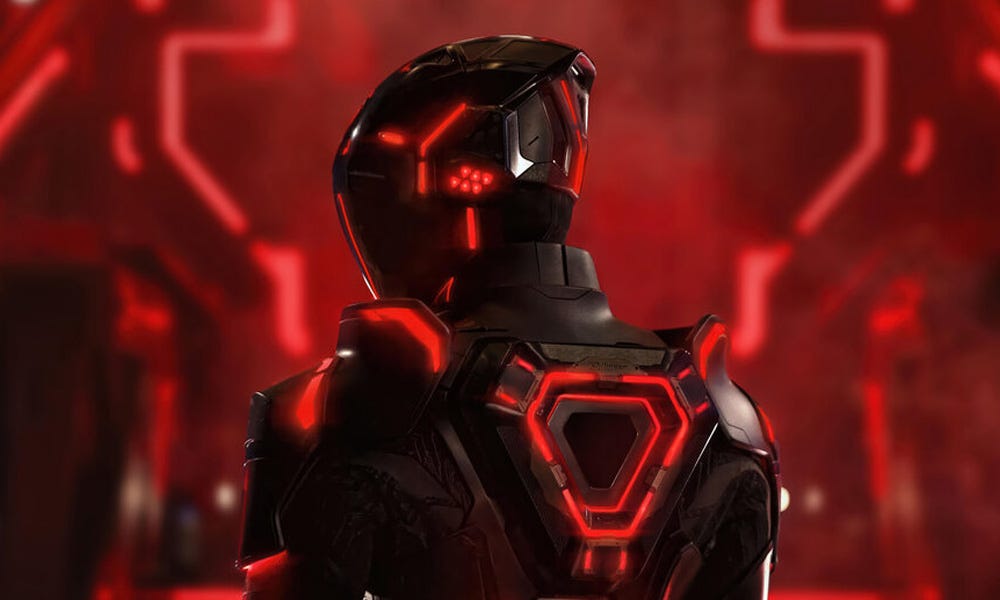
Officially, Tron 2.0 remains outside continuity. Yet fans see potential links. Ares introduces real-world AI warfare, paralleling 2.0’s digital corruption. Its plot—pitting Jared Leto’s sentient program Ares against Greta Lee’s engineer Eve Kim—echoes Jet’s battle with Ma3a.
ScreenRant and Collider speculate Ares’ “Permanence Code” could tie to 2.0’s upgrade tech. A viral YouTube analysis, “Tron Timeline Explained (1982–2025),” suggests Ma3a might have been Clu’s prototype, setting the stage for Ares’ rebellion. Lisberger himself hinted to Den of Geek in 2011, “Games like 2.0 are wild cards—maybe we loop them back someday.”
Tron: Ares’ B+ CinemaScore and $60.5M global opening hint at moderate success, but its missing Sam Flynn storyline has fueled rumors that Tron 4 could restore 2.0’s legacy.
Speculating Tron 4: The Unified Grid
If Disney moves forward with Tron 4, it could merge the saga’s disparate threads. A speculative narrative could see Ares’ experiments fracture digital reality, pulling Jet Bradley from his corrupted system into Sam Flynn’s Grid.
Quorra (Olivia Wilde) and Eve (Greta Lee) might work together to decode Ma3a’s dormant code, while Tron—rebuilt from fragmented memories—leads a resistance against an AI singularity. Director Joachim Rønning has teased a “larger digital scope,” potentially bridging Tron 2.0, Uprising, and Legacy into one final act.
If greenlit post-Ares, Tron 4 could be the long-awaited redemption arc for Boxleitner’s iconic hero—and the true closure fans have awaited since 1982.
Monolith Productions: The Studio That Built Tron 2.0—And Vanished in 2025
Founded in 1994 in Redmond, Washington, Monolith Productions made its name with Blood, Shogo: Mobile Armor Division, and the F.E.A.R. franchise before being acquired by Warner Bros. Interactive in 2004. The studio later developed Middle-earth: Shadow of Mordor (2014) and Shadow of War (2017), both massive hits thanks to their innovative Nemesis System.
But after years of silence, Warner Bros. shuttered Monolith on February 25, 2025, per Bloomberg and GamesIndustry.biz, amid cost-cutting and the cancellation of its Wonder Woman project. Its closure marked the end of a 31-year legacy—and the final derezzing of the team that gave Tron its first real sequel.
Ares Hype and the Echoes of Erased Code
Tron: Ares’ modest debut and mixed critical response underscore Disney’s challenge: balancing nostalgia with innovation. Its AI themes mirror Tron 2.0’s cautionary tale of perfection gone rogue. As Bruce Boxleitner told Collider in 2025, “There’s still more Tron to tell.”
Whether Disney reboots, retcons, or resurrects the game’s lore, one truth remains: in the digital frontier, no code ever truly dies.
Hat Tips
Tron Fandom: TRON 2.0
Wikipedia: Tron 2.0
GameFAQs: Tron 2.0 Release Information
IGN: Tron 2.0 (2003)
Ain’t It Cool News: Interview with Steven Lisberger (2002)
TV Tropes: Tron 2.0 Canon Status
Wikipedia: Monolith Productions
Crunchbase: Monolith Productions Company History
GamesRadar+: From Shogo to Shadow of War
PC Gamer: Wonder Woman Game Announcement
PlayStation Universe: Monolith’s Next Game Details
Variety: Tron: Ares Box Office (October 12, 2025)
Deadline: Tron: Ares Opening Weekend
Collider: Why Did It Take 15 Years to Get a Third Tron Movie?
ScreenRant: Tron: Ares Theory Suggests There’s a Role for Sam Flynn
YouTube: The Complete Tron Timeline (1982–2025)
GamesRadar: Tron: Ares Director Already Has an Idea for Tron 4