

Disney CEO Josh D’Amaro said the company is exploring a free, ad-supported streaming product, following Tubi and the Roku Channel. The counterintuitive reason: Disney says it’s “fairly well sold” on ads, so a free tier gives it more space to sell.
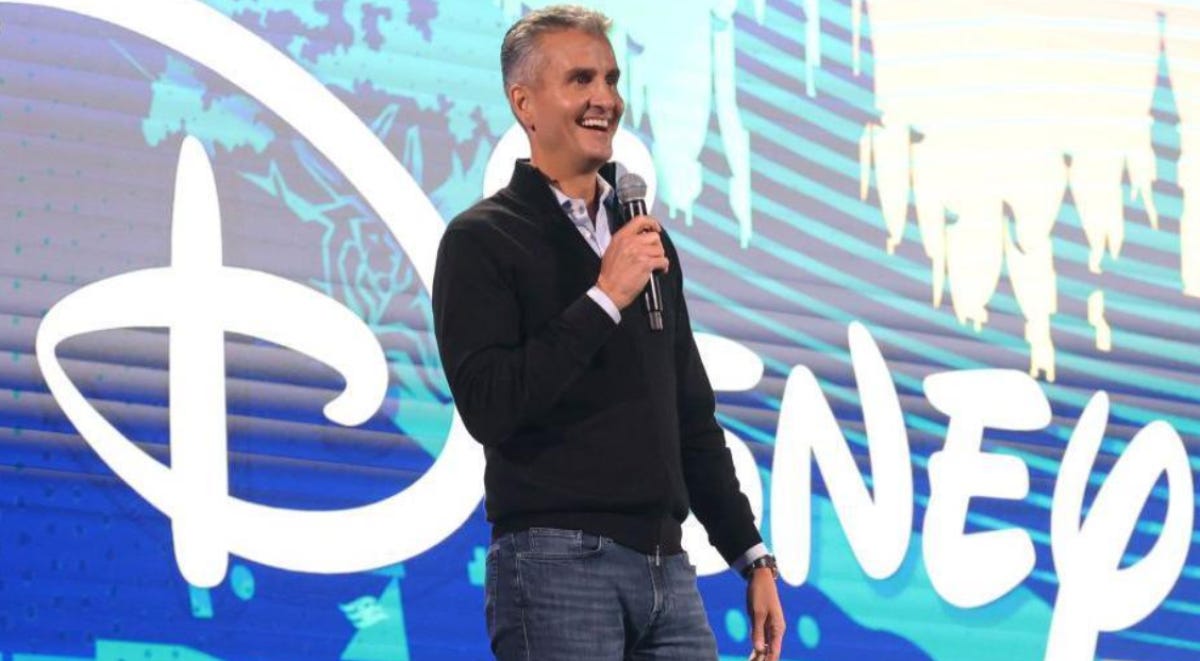
Disney might give some of its content away for free, and the reason isn’t the obvious one.
On Wednesday’s earnings call, CEO Josh D’Amaro said Disney is exploring a FAST product, which stands for free ad-supported streaming television. Think free channels you watch with commercials, no subscription, the kind of thing Tubi and the Roku Channel have been quietly cleaning up with.
“We’re exploring a free product for consumers,” D’Amaro told investors. “Nothing specific to announce today, but definitely something that we’re considering.”
So it’s a maybe, not a launch. But the why behind it is the interesting part.
Why Disney would launch a free streaming service
The obvious guess is that Disney wants to reach people who won’t pay for Disney+. That’s part of it, and D’Amaro said so.
A free tier lets Disney reach a “customer segment that’s more price sensitive,” he said, and expanding reach is one of the company’s stated priorities. Free content is also a funnel. Someone who starts with the free channels might upgrade to paid Disney+ or Hulu later.
But then D’Amaro said the part that actually explains the move.
Disney says it’s “fairly well sold” on ads, which is the real reason
Here’s the counterintuitive bit. Most companies launch a free, ad-supported tier because they need more subscribers. Disney says it needs more ad space.
“Unlike a lot of our AVOD competitors, we’re fairly well sold, meaning more inventory would actually help us accelerate our ad revenue growth,” D’Amaro said.
Translated out of investor-speak: Disney is running low on ad slots to sell. Its ad-supported streaming is doing well enough that it’s nearly out of commercial breaks to fill with paying advertisers. A free service creates a whole new pile of ad space Disney can sell against.
So this isn’t really Disney deciding to give content away. It’s Disney building more shelves to stock with ads, and the free content is what fills the store. The reach and the funnel are nice bonuses on top.
Tubi and the Roku Channel are why everyone is chasing FAST
Disney isn’t having this idea in a vacuum. It’s watching free streaming eat into the TV pie in real time.
In May, Tubi captured 2.3% of all TV viewing in the US, and the Roku Channel grabbed 3.1%. Those aren’t rounding errors. Tubi, owned by Fox, now has nearly 100 million monthly users, and its revenue jumped 23% year over year.
Ironically, Fox bought Tubi after the $71 billion deal with Disney, then used some of the money to buy the small streaming service. Now Disney wants to pivot to compete.
The rest of the industry is circling the same water. Fox is buying Roku to get the Roku Channel. Even Netflix, the company that spent a decade insisting on paid-only, has admitted a free offering “could make sense in some markets,” though co-CEO Greg Peters said in July there are no near-term plans.
When Netflix and Disney are both eyeing free, the free market has officially stopped being the bargain bin and started being the battleground.
The free push cuts against Disney’s own paid-streaming pitch
Worth holding two things at once here, because they’re in slight tension.
Disney has spent 2026 pushing hard in the other direction, toward paid. D’Amaro spent the spring calling Disney+ and reducing churn, meaning people canceling, maybe the single biggest opportunity the company has. This same week, Disney teased turning Disney+ into a “comprehensive membership ecosystem” rolling out early next year, and struck a TikTok deal to pull creator videos into the app. All of that is about making paid Disney+ stickier.
A free FAST tier is a different bet. It’s reaching the people who look at Disney+’s price and walk away.
Both can be true. Disney can chase the subscribers who’ll pay premium while also setting up a free net to catch the ones who won’t. Plenty of companies run both. But it’s a notable shift for a company whose whole streaming identity was built on the paid Disney+ subscription, and it tells you the free market got too big for even Disney to keep ignoring.
Nothing’s launched yet. D’Amaro was clear this is exploration, not an announcement. But when the biggest name in entertainment starts talking about going free, it’s usually because the free guys got too good to keep pretending they weren’t there.
Article compiled with the help of the Pirates & Princesses newsroom.
Pirates and Princesses is your destination for Disney news, theme park updates, and the pop culture you love. From Disney cruises and travel tips to Disney fashion, food, collectibles, and movie news, PNP covers it all. Visit us at piratesandprincesses.net for daily coverage. Follow PNP on Facebook and Instagram, and listen to the Pirates & Princesses podcast on Apple Podcasts and YouTube.
Hat Tips:
The Hollywood Reporter (August 5, 2026), the D’Amaro FAST quotes from the earnings call, the Tubi and Roku Channel viewing shares, the Netflix context, and the SVOD revenue and subscriber figures
Variety (August 5, 2026), D’Amaro framing FAST as an ad-inventory and subscriber funnel play
Deadline and CNBC (August 5, 2026), Disney’s Q3 earnings, the streaming profit jump, and the membership-ecosystem tease
TheStreet via AOL (July 17, 2026), Tubi’s ~100 million monthly users and D’Amaro’s earlier churn-focused streaming comments