

Disney and ABC filed a First Amendment lawsuit against the FCC on Tuesday, asking a federal court to halt an early review of eight station licenses. Disney calls it a retaliatory campaign. FCC Chairman Brendan Carr says the review stems from a DEI investigation.
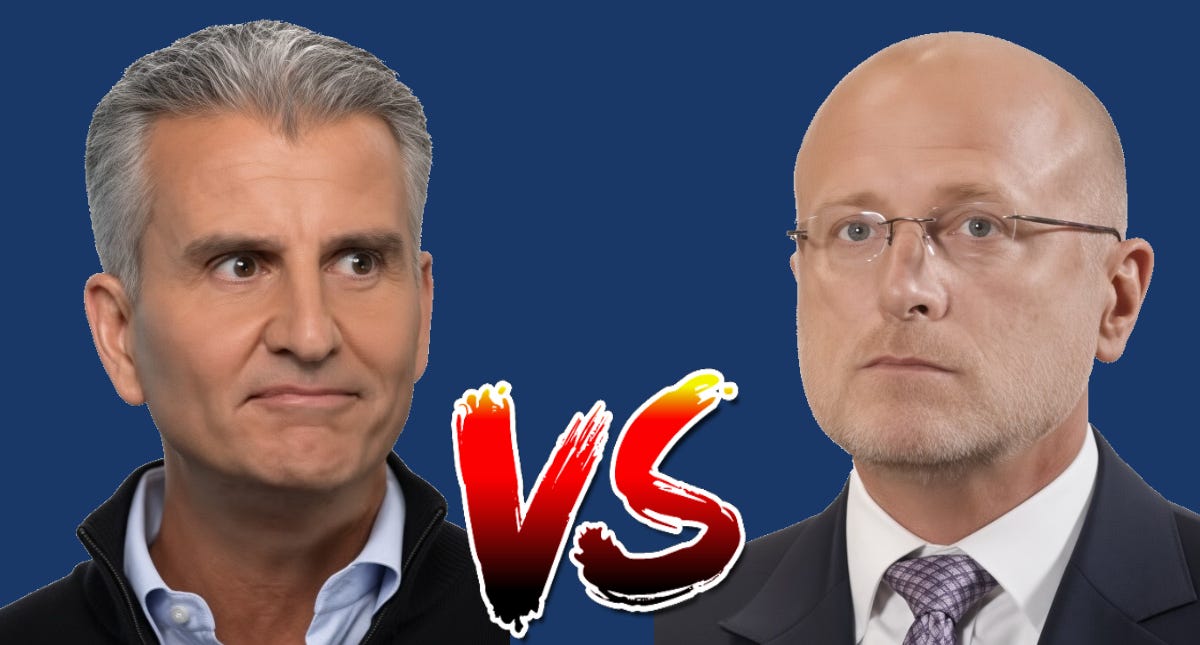
Disney took the federal government to court on Tuesday.
The company and its ABC unit filed a First Amendment lawsuit against the Federal Communications Commission in U.S. District Court in Washington, D.C., seeking to stop an early review of broadcast licenses for eight ABC-owned stations.
Disney is asking for a temporary restraining order and a preliminary injunction, arguing the FCC could act at any time now that the public comment period has closed.
What Disney’s lawsuit argues
The complaint is blunt about what Disney believes is happening.
The administration “has waged a retaliatory campaign against ABC for a single reason: it disapproves of what ABC broadcasts,” the filing states.
“Again and again, the administration has attacked ABC’s speech, the stories its journalists report and the viewpoints its network programs air,” it continues, adding that the company has “no alternative means to eliminate these ongoing and immediate threats other than total capitulation to the Administration’s demands.”
Disney’s attorneys also raise a procedural objection. The FCC’s order required the stations to file renewal applications “years before any of their licenses would have come up for renewal in the ordinary course,” allowing only 30 days for paperwork that normally takes months.
What the FCC says
Brendan Carr, the FCC chairman, has consistently offered a different account.
Carr maintains the early review grew out of the agency’s investigation into Disney’s diversity, equity, and inclusion practices, not from any programming decision. He ordered the reviews in April.
Carr did not immediately comment on Tuesday’s lawsuit, and neither did the FCC or the White House.
Supporters have backed his position. “It is not in the public interest for ABC to operate as an arm of the DNC,” said Daniel Suhr, president of the Center for American Rights, earlier this year.
First Amendment organizations have criticized the FCC’s action, and the National Association of Broadcasters has called the moves nearly unprecedented.
The facts both sides are arguing about
The licenses for the eight stations were not scheduled for renewal until October 2028. The FCC ordered them reviewed anyway.
Before April, the FCC had not ordered an early license review in more than 50 years.
The April order came one day after President Trump publicly urged ABC to fire late-night host Jimmy Kimmel over a joke about the first lady. Trump had also called in November for the FCC to revoke ABC’s licenses, after an ABC News correspondent asked Saudi Arabia’s crown prince about the 2018 killing of a Washington Post columnist.
The FCC is separately investigating ABC’s daytime program The View.
Disney points to that sequence as evidence of retaliation. Carr points to the DEI investigation as the basis for the review.
Disney hired a former Solicitor General
The legal team says something about how seriously Disney is treating this.
The complaint is signed by Beth Wilkinson and Paul Clement. Clement served as U.S. Solicitor General under George W. Bush from 2005 to 2008 and has argued more than 100 cases before the Supreme Court, making him one of the most sought-after appellate litigators in the country.
The suit also makes a point of noting that Disney, better known for theme parks and Star Wars than for local television stations, did not go looking for a fight with the federal government.
What happens next
The immediate question is whether the court grants the restraining order before the FCC acts.
Disney says the commission could move at any time. Reporting indicates the FCC is expected to reach a determination on the renewals next month.
Broadcast stations need FCC licenses to use the public airwaves. Actual revocations are extremely rare, and the agency has not pulled a license under its public-interest standard in over four decades. Critics argue the threat alone carries weight regardless of the outcome.
The eight stations cover major markets including Los Angeles, New York, and Philadelphia. For Disney, they are a small piece of a very large company. The precedent a ruling sets would not be.
Article compiled with the help of the Pirates & Princesses newsroom.
Pirates and Princesses is your destination for Disney news, theme park updates, and the pop culture you love. From Disney cruises and travel tips to Disney fashion, food, collectibles, and movie news, PNP covers it all. Visit us at piratesandprincesses.net for daily coverage. Follow PNP on Facebook and Instagram, and listen to the Pirates & Princesses podcast on Apple Podcasts and YouTube.
Hat Tips:
Reuters via NY Daily Record (August 18, 2026), David Shepardson’s reporting on the filing, the eight stations, the restraining order request, the October 2028 renewal timing, and the 50-year precedent
CNN (August 18, 2026), the retaliatory campaign quote, the Daniel Suhr comment, and the First Amendment group reaction
NBC News (August 18, 2026), the Wilkinson and Clement complaint language and the 30-day filing window
CNBC and Variety (August 18, 2026), the lawsuit’s characterization of the FCC investigation and the capitulation quote
iHeart and MoneyCheck (August 18, 2026), Carr’s position that the review stems from the DEI probe and the expected determination timing