

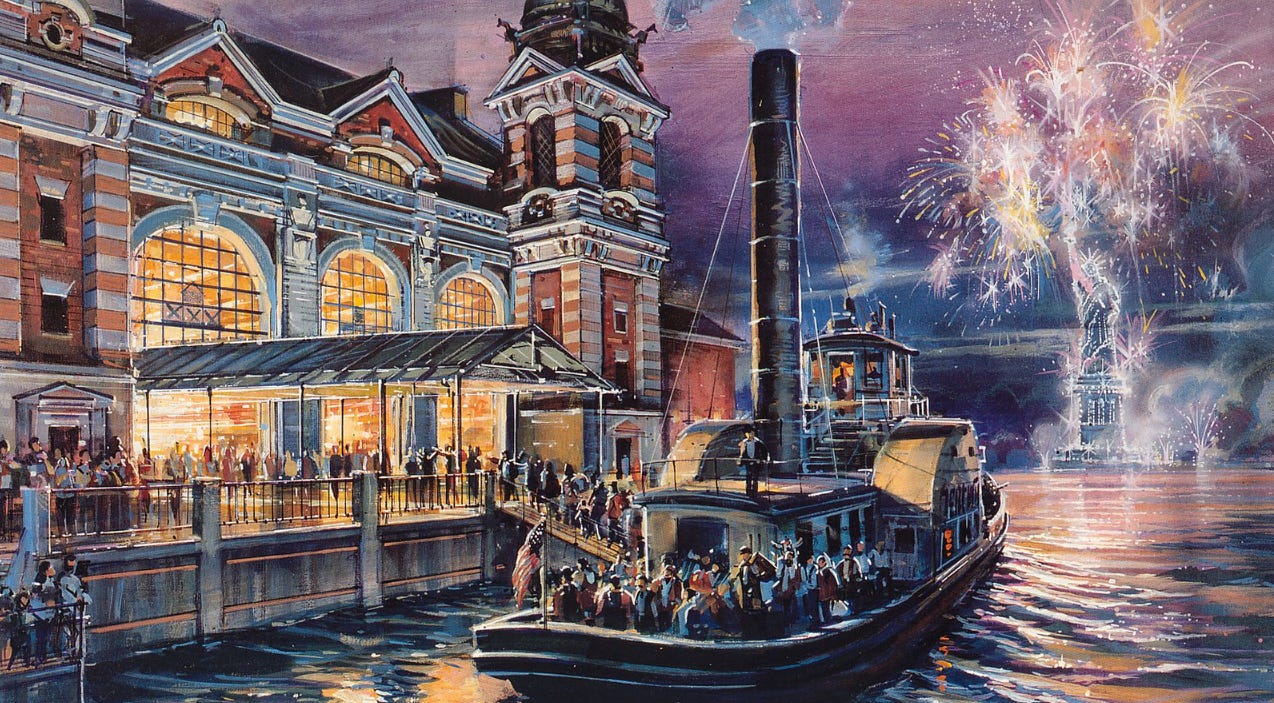
For America’s 250th birthday, here’s a wild what-if: Disney once planned an entire theme park about U.S. history, right next to a Civil War battlefield. It collapsed in a firestorm of controversy in 1994. But some of its ride concepts didn’t die, you can ride them today.
With America celebrating its 250th birthday, it’s the perfect time to revisit one of Disney’s most fascinating “what-ifs”: the time the company tried to build an entire theme park about U.S. history, and it blew up in spectacular fashion.
It was called Disney’s America, and it never opened. But the story of why it failed, and what happened to its ride ideas afterward, is genuinely wild. Here’s the tale of the Disney park that wasn’t.
The big idea
Let’s start with what Disney actually wanted to build, because it was ambitious.
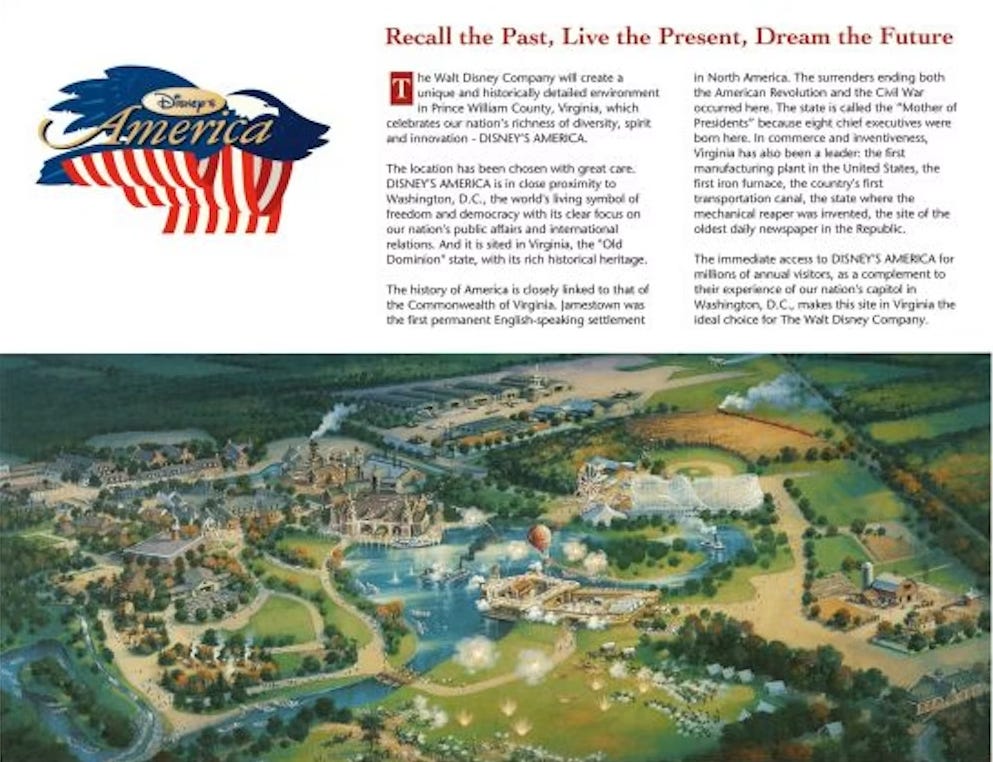
In November 1993, Disney announced plans for Disney’s America, a history-themed park to be built in Haymarket, Virginia, a rural area about 35 miles from Washington, D.C. The $650 million park would cover roughly 3,000 acres and immerse guests in different eras of American history, from the Revolution to the Civil War to the Industrial Age.
The concept came from CEO Michael Eisner, inspired by a visit to Colonial Williamsburg. Disney quietly bought up the land through shell companies, and initially had support from Virginia’s governors. On paper, it looked like a done deal.
The attractions that were planned
Here’s where it gets cool, because some of these ideas were genuinely great.
Disney’s America was to feature nine themed areas around a central lagoon, with attractions like:
A Lewis & Clark whitewater raft ride through the wilderness
A Civil War fort experience
An Industrial Revolution roller coaster
A working family farm and factory tours
A patriotic “State Fair” area
And one attraction that would spark enormous controversy: an experience about slavery and the Underground Railroad.
Why it all fell apart
This is the part that turned a theme park into a national news story.
The backlash was fierce and came from every direction. The loudest voices were historians, including Civil War documentary legend Ken Burns, Pulitzer winner James McPherson, and author Shelby Foote, who argued that Disney would inevitably “sanitize” America’s most painful chapters, turning slavery, war, and Native American history into sanitized entertainment.
It didn’t help when a Disney VP, trying to describe the slavery attraction, said the park wanted to “make you feel what it was like to be a slave.” Critics pounced, arguing you can’t turn that history into a theme-park ride.
The opposition snowballed:
Environmental concerns about wetlands and rural land
Traffic fears about the already-congested I-66 corridor
Preservationists worried about building next to the real Manassas battlefield
Consumer advocate Ralph Nader got involved, and a protest of nearly 3,000 people marched in Washington in September 1994
The final blow
A few other dominoes fell at exactly the wrong time.
Behind the scenes, Disney was reeling. Company president Frank Wells died in a helicopter crash in April 1994. Eisner underwent heart bypass surgery that July. The company was also drowning in debt from its struggling Euro Disney (Paris) park, and executives quietly worried a history park in Virginia wouldn’t draw crowds in cold winter months.
Disney tried to save it, even rebranding the project “Disney’s American Celebration” to soften the tone. Nothing worked. On September 28, 1994, Disney pulled the plug. The park was dead.
But the ideas didn’t die, here’s what you can still ride
Now for the genuinely fun part, and the reason this story has a happy ending for Disney fans.
When Disney built Disney California Adventure (which opened in 2001 next to Disneyland), Imagineers reached into the Disney’s America idea box and repurposed several concepts. So attractions born for a failed Virginia park live on in Anaheim:
Grizzly River Run, DCA’s popular whitewater rapids ride, is essentially the Lewis & Clark raft ride that was planned for Disney’s America
California Screamin’ (the big Paradise Pier roller coaster, later re-themed to Incredicoaster) grew out of the planned “State Fair” coaster
Bountiful Valley Farm was the family farm concept
Condor Flats, DCA’s aviation-themed area, came from a planned section called “Victory Field”
So if you’ve ever gotten soaked on Grizzly River Run, congratulations, you’ve experienced a piece of the theme park that never officially existed.
The one more twist
There’s an epilogue most people don’t know about.
Disney didn’t fully give up on the history-park dream right away. In 1997, the company tried to buy and convert Knott’s Berry Farm in California into a version of Disney’s America (the fact that Knott’s already had a replica of Independence Hall made it weirdly perfect). But the Knott family, worried Disney would gut the park their parents built, sold to Cedar Fair instead. That was the true end of the road.
As for the Virginia land? It never became a tourist destination. Today it’s home to Dominion Valley Country Club, an upscale gated community, quiet suburban homes where Civil War forts and roller coasters were once planned.
The bottom line
Here’s the takeaway on this fascinating footnote.
Disney’s America is one of the great “what could have been” stories in theme park history, a genuinely bold idea that collided with genuinely serious questions about who gets to tell America’s story, and how. The historians had a real point about the risks of turning slavery into a ride, and Disney arguably underestimated just how sensitive that ground would be, literally and figuratively, next to Manassas.
But the creative DNA didn’t vanish. It scattered into Disney California Adventure, where millions of guests enjoy pieces of it every year without knowing the history behind them. So as the country marks its 250th, it’s worth remembering the Disney park that tried to celebrate American history, failed, and quietly became part of Disney history itself.
Sometimes the best “what-ifs” leave fingerprints you can still find, if you know where to look.
Article compiled with the help of the Pirates & Princesses newsroom.
Pirates and Princesses is your destination for Disney news, theme park updates, and the pop culture you love. From Disney cruises and travel tips to Disney fashion, food, collectibles, and movie news, PNP covers it all. Visit us at piratesandprincesses.net for daily coverage. Follow PNP on Facebook and Instagram, and listen to the Pirates & Princesses podcast on Apple Podcasts and YouTube.
Hat Tips:
Smithsonian Magazine and The Conversation (2024-2026), verified for the project timeline (November 1993 announcement, September 28, 1994 cancellation), the Haymarket/Manassas location, the Eisner/Colonial Williamsburg origin, the historian opposition (Ken Burns, James McPherson, Shelby Foote), and the Frank Wells death / Euro Disney debt / cold-weather-profitability factors
Disney Wiki and AllEars.Net (2023-2026), verified for the specific attraction concepts (Lewis & Clark raft ride, State Fair coaster, family farm), the migration into Disney California Adventure (Grizzly River Run, California Screamin’, Bountiful Valley Farm, Condor Flats), and the 1997 Knott’s Berry Farm conversion attempt
Collider and Attractions Magazine (2020-2026), verified for the Bob Weis “make you feel what it was like to be a slave” quote, the Ralph Nader involvement and ~3,000-person September 1994 protest, the “Disney’s American Celebration” rebrand, and the land becoming Dominion Valley Country Club