

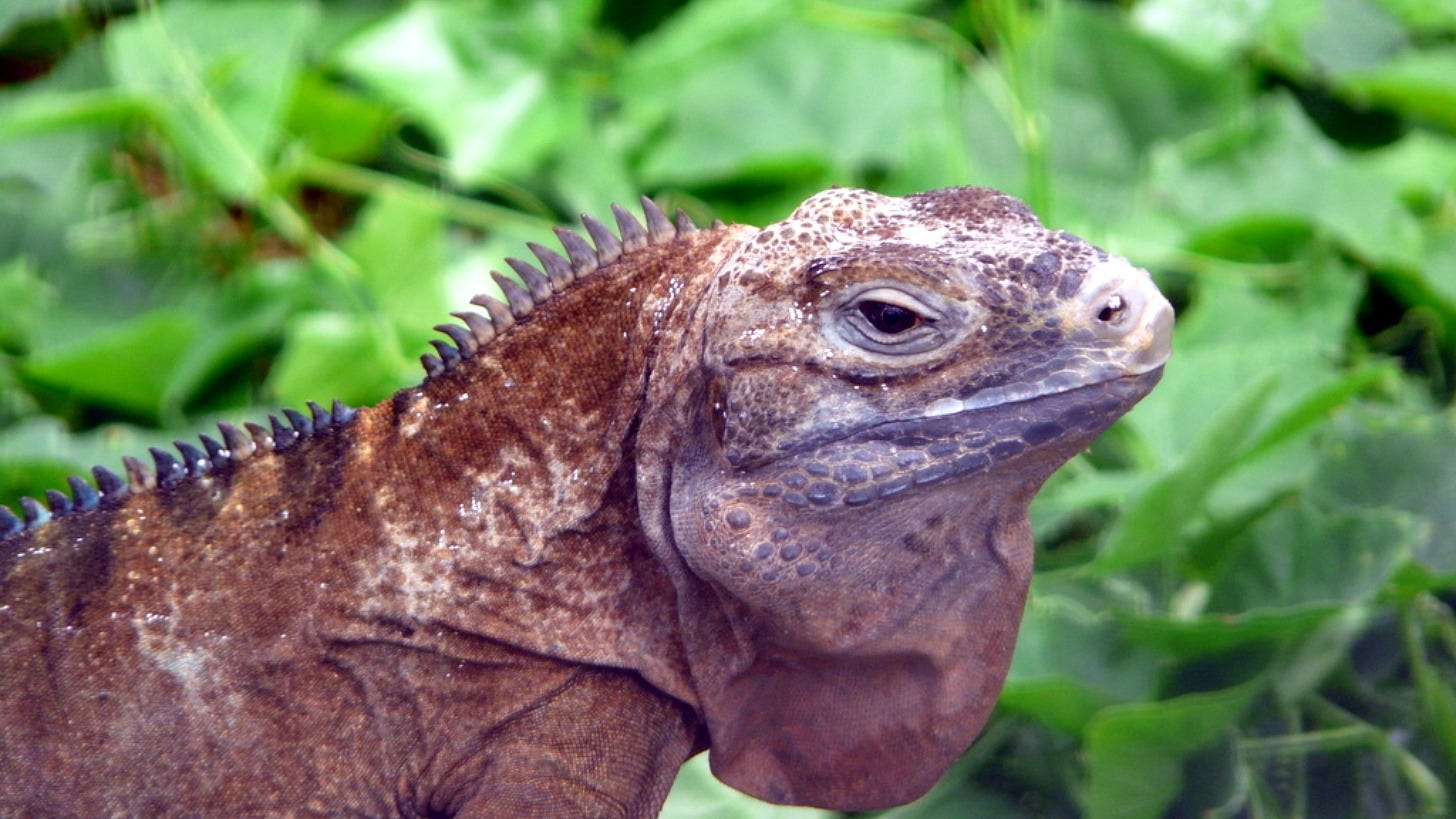
Four critically endangered Jamaican iguanas just hatched backstage at Disney’s Animal Kingdom. This species was once thought extinct for about 40 years, so every baby counts.
Disney’s Animal Kingdom has four new babies, and they’re about as rare as it gets. Four critically endangered Jamaican iguanas recently hatched backstage at the park.
Disney’s animal care team shared the news on the Animals at Disney Instagram account on Monday, Nov. 2. The hatchlings are part of the Association of Zoos and Aquariums’ Species Survival Plan for Jamaican iguanas.
That’s a mouthful. In plain English, it’s a breeding program zoos run together to keep endangered animals from disappearing.
Why are Jamaican iguana hatchlings such a big deal?
Because this lizard was almost gone for good. The Jamaica Information Service says the species was declared extinct in 1948.
Then, in 1990, it turned up again in the Hellshire Hills, a patch of dry forest in southern Jamaica. The Jamaica Gleaner reported that only about 20 adults were found, and very few of them were female.
The International Union for Conservation of Nature lists the Jamaican iguana as critically endangered. That’s its highest risk category short of extinct in the wild.
Disney’s post said the hatchlings are helping keep “a healthy, genetically diverse population of one of the rarest iguana species in the world,” according to WDW News Today.
How many Jamaican iguanas are left in the wild?
Very few, and the counts vary. An IUCN Iguana Specialist Group species sheet from 2013 estimated about 200 adults.
The International Iguana Foundation puts the number closer to 800. Either way, that’s a tiny population for an entire species.
They only live in about 3.8 square miles of forest in the Hellshire Hills, according to San Diego Zoo Wildlife Alliance. For comparison, Walt Disney World covers about 39 square miles.
What happened to the Jamaican iguana?
Mostly, people brought in animals that eat them. The small Indian mongoose was brought to Jamaica in 1872 to control rats, and it also preys on young iguanas.
Cats, dogs and wild pigs are a problem, too. So is the cutting of trees for charcoal, plus new development near their home, according to the IUCN and San Diego Zoo Wildlife Alliance.
Baby iguanas have it the hardest. They’re small, slow to grow and easy targets.
How are zoos helping save the Jamaican iguana?
Jamaica’s Hope Zoo started a “headstart” program in 1991. Crews collect hatchlings from the wild and raise them safely for about four to six years, until they’re big enough to fend off predators.
The first headstarted iguanas went back into the wild in 1996. By 2024, more than 700 had been released, the Jamaica Gleaner reported.
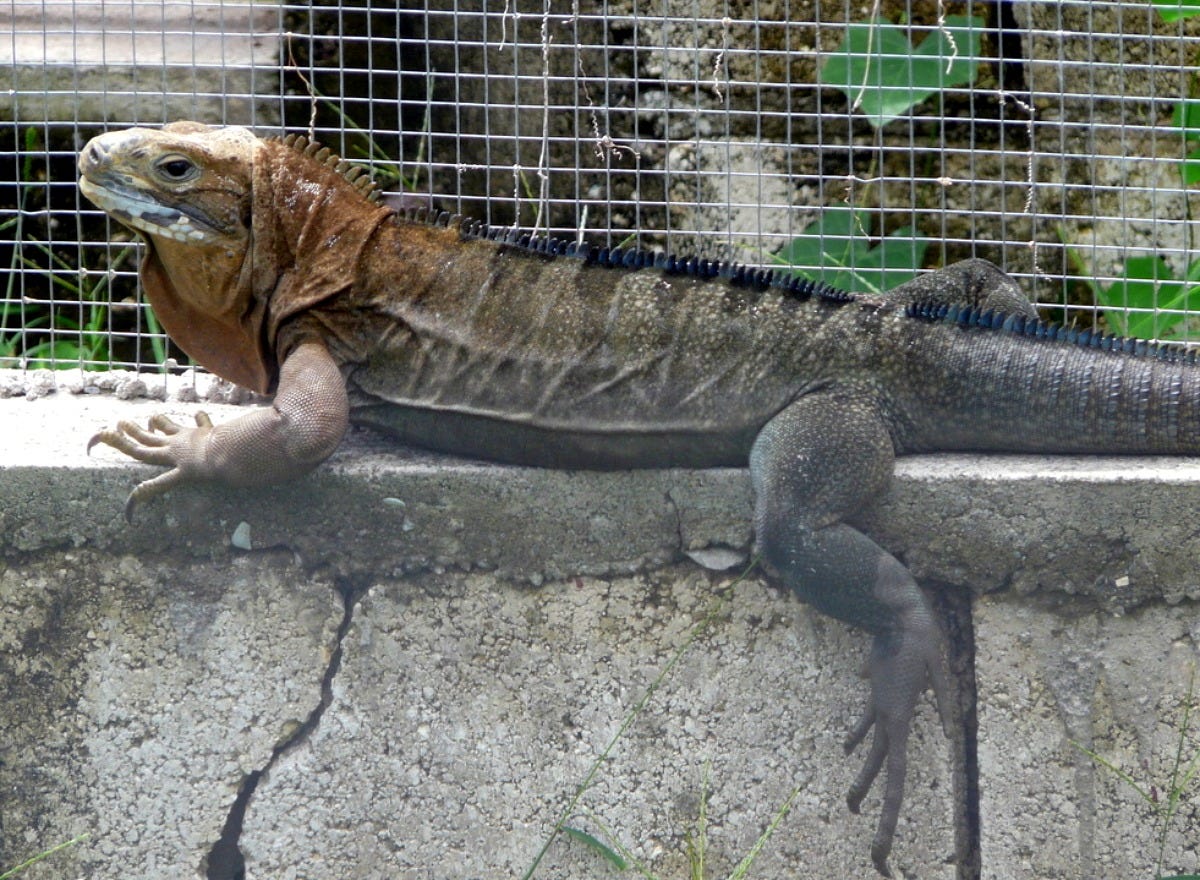
Zoos in the United States help too. Fort Worth Zoo and San Diego Zoo are part of the Jamaican Iguana Recovery Group, and U.S. zoos keep a backup population in case something goes wrong in the wild.
Animal Kingdom’s four hatchlings add more genetic variety to that backup group. It’s slow, careful work, but it’s the reason this species is still around.
Can you see the baby iguanas at Disney’s Animal Kingdom?
Disney hasn’t said whether guests will be able to see them. The hatchlings were born backstage, away from the public.
Want an iguana fix on your next visit? WDW News Today and Laughing Place point to Sid, a rhinoceros iguana in the Oasis near the park entrance.
Grown Jamaican iguanas are greenish to bluish gray with a crest down their backs, according to the IUCN species sheet. Babies are lighter and more striped, which makes them extra cute in a tiny dinosaur kind of way.
What other baby animals has Animal Kingdom welcomed?
It’s been a busy year for the animal teams. WDW News Today reported that Ivy, a Masai giraffe, debuted on Kilimanjaro Safaris in June.
WDWNT also reported two Ankole cattle calves born at the park this year.
Most guests will never see these four iguanas. But every time one hatches, a species that was once written off gets a little more of a future. That’s a pretty great reason to celebrate at a theme park.
Article compiled and written by Kambrea Pratt (editor-in-chief), Derek Gibbs (beat editor) and the Pirates & Princesses newsroom. Pirates & Princesses is part of WebReef Media.
Pirates and Princesses is your destination for Disney news, theme park updates, and the pop culture you love. From Disney cruises and travel tips to Disney fashion, food, collectibles, and movie news, PNP covers it all. Visit us at piratesandprincesses.net for daily coverage. Follow PNP on Facebook and Instagram, and listen to the Pirates & Princesses podcast on Apple Podcasts and YouTube.
Hat Tips:
Animals at Disney (Nov. 2, 2026), Instagram announcement of the four hatchlings
WDW News Today (Nov. 2, 2026), Disney quote, Sid the rhinoceros iguana and other 2026 births
Laughing Place (Nov. 2, 2026), hatchling report and Oasis iguana
Jamaica Information Service, the 1948 extinction declaration
Jamaica Gleaner (March 18, 2024), 1990 rediscovery and headstart releases
IUCN Iguana Specialist Group, status, threats, appearance and population estimate
San Diego Zoo Wildlife Alliance, range size and threats
International Iguana Foundation, wild population estimate
AI Disclosure: All articles are assigned, edited and reviewed by an experienced human editor before posting. Like most modern newsrooms, WebReef Media uses a variety of AI tools to help with accuracy and efficiency. Ways AI may be used in article creation include research, grammar, fact-checking and ideation, as well as occasional AI generated or enhanced thumbnails or graphics. No articles are generated or posted without human oversight or involvement.