

Florida’s rare February cold snap in 2026 has plunged temperatures into the mid-30s across the southern part of the state, stunning invasive green iguanas and sending them tumbling from trees where they perch.
Here’s the TL;DR...
South Florida faced its coldest weather since 2010, with lows hitting 35 degrees in Miami and wind chills dipping into the 20s.
Cold-blooded iguanas become immobilized when temps drop below 45 degrees, leading to falls from trees, but most recover as it warms up.
The Florida Fish and Wildlife Conservation Commission temporarily allowed permit-free removal of stunned iguanas on February 1 and 2 to manage the invasive species.
A brief warming trend starts mid-week, though another cold front could arrive by Thursday, keeping freeze risks alive.
Why Do Iguanas Fall From Trees During Florida Cold Snaps?
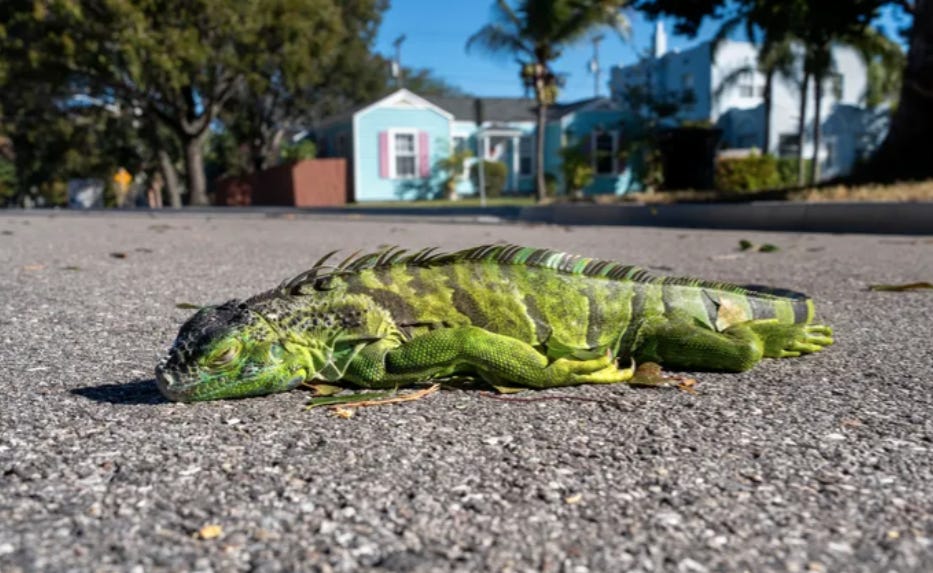
Green iguanas, native to warmer climates in Central and South America, lose muscle control in cold weather because they can’t regulate their body temperature. When South Florida sees dips below 45 degrees Fahrenheit, these reptiles enter a torpor state, appearing frozen and often dropping from high branches. This phenomenon hit hard in early February 2026, with reports from Miami to West Palm Beach of iguanas littering sidewalks and lawns.
Residents like those in Hollywood noted piles of the lizards after overnight lows reached the mid-30s. The event echoed past cold snaps, but this one’s intensity broke records in some areas.
How Cold Has It Gotten in Florida This February?
Temperatures across South Florida plummeted to 35 degrees in Miami on February 1, marking the coldest February day there on record and the lowest overall since 2010. Wind chills made it feel even harsher, reaching the mid-20s in places like Pembroke Pines.
Freeze warnings covered much of the region through February 3, with inland spots dropping into the 20s and 30s. Even Key West felt the bite with 50s, while northern Florida saw flurries. This arctic surge followed a strong front, and meteorologists noted it as one of the deepest cold outbreaks in over a decade.
What Happens to Iguanas When Temperatures Drop So Low?
As ectothermic animals, iguanas rely on external heat to stay active. Below 45 degrees, their metabolism slows, causing paralysis-like stiffness without actual freezing. They don’t die from the cold alone but risk injury from falls or predation while immobile.
Many revive as sunlight raises temps, scampering away once warmed. In this 2026 event, videos showed them lying still on roads, only to stir later. Experts stress they’re not hibernating—just temporarily out of commission.
What Should You Do If You Find a Stunned Iguana on the Ground?
The National Weather Service advises leaving stunned iguanas alone, as they usually recover naturally when temperatures rise. Avoid handling them, since they can bite or scratch once revived, and watch your head under trees to dodge falling ones.
During this snap, the FWC urged reporting or removing them humanely under a temporary executive order, but that window closed after February 2. If you spot one now, contact local wildlife officials instead of trying to warm it yourself.
Are These Iguanas Native to Florida, and What’s Their Impact?
Green iguanas are invasive, introduced in the 1960s via the pet trade, and they’ve thrived in Florida’s subtropics. They burrow into canal banks, erode infrastructure, and devour native plants, disrupting ecosystems.
Thousands were rounded up during the February 2026 cold spell, with removal services like Redline Iguana Removal collecting stunned ones for humane dispatch or relocation. The FWC views these events as opportunities to cull populations, estimating over 600 dropped off at offices in just one day.
How Has This Cold Snap Affected People and Wildlife Beyond Iguanas?
Floridians bundled up against the chill, with crop damage reported in central areas and emergency shelters opening for the homeless. Power demands spiked from heating, but no widespread outages occurred.
For wildlife, the cold stressed other cold-sensitive species, though iguanas drew the most attention. Social media buzzed with photos and warnings, turning the event into a quirky news staple. Some locals joked about “raining reptiles,” but officials emphasized safety.
What’s the Forecast for Florida After This Iguana-Dropping Cold?
Warming begins Tuesday, February 3, with highs climbing to the 60s and 70s by mid-week. However, another front arrives Thursday, potentially dropping lows back into the 40s without reaching prior extremes.
Meteorologists predict a return to normal subtropical weather soon, but this snap highlights Florida’s vulnerability to rare winter intrusions. Long-term, weak La Niña patterns could mean more variable winters ahead.
This February 2026 cold snap serves as a reminder of Florida’s occasional wintry side, blending hazard with oddity in the form of falling iguanas. While the immediate chill eases, it underscores the need for vigilance with invasive species and weather shifts. Residents can breathe easier knowing the iguanas—and the warmth—will return, but events like this keep the state’s ecosystem management in focus.
Hat Tips
CNN, “Florida cold snap freezes iguanas,” February 2, 2026: https://www.cnn.com/2026/02/02/us/video/florida-cold-snap-freezes-iguanas-digvid
USA Today, “Iguanas look ‘frozen,’ fall from trees as temps drop in South Florida,” February 2, 2026: https://www.usatoday.com/story/news/weather/2026/02/02/frozen-iguanas-fall-trees-florida/88475628007
The Atlantic, “It’s So Cold in Florida Iguanas Are Falling Out of Trees,” February 3, 2026: https://www.theatlantic.com/photography/2026/02/photos-frozen-iguanas-florida-cold-snap/685863
Fortune, “It’s so cold in Florida that iguanas are falling out of trees,” February 2, 2026: https://fortune.com/2026/02/02/its-so-cold-in-florida-that-iguanas-are-falling-out-of-trees
The Independent, “Thousands of ‘frozen’ iguanas rounded up after falling from trees,” February 3, 2026: https://www.the-independent.com/bulletin/news/florida-iguanas-frozen-falling-from-trees-invasive-species-b2913219.html
NBC Miami, “After historic cold snap in Florida, chilly weather is still expected,” February 2, 2026: https://www.nbcmiami.com/news/local/after-historic-cold-snap-in-florida-cold-weather-is-still-expected/3758024
Palm Beach Post, “Florida forecast: Another cold front after historic February freeze,” February 3, 2026: https://www.palmbeachpost.com/story/weather/2026/02/03/second-cold-front-heading-to-florida-after-record-breaking-chill/88488258007
National Weather Service post on X, January 18, 2026.
CBS12 News post on X, February 1, 2026.
Article compiled by Newsroom Staff on February 04, 2026 and was fact-checked by Editorial before publication.