

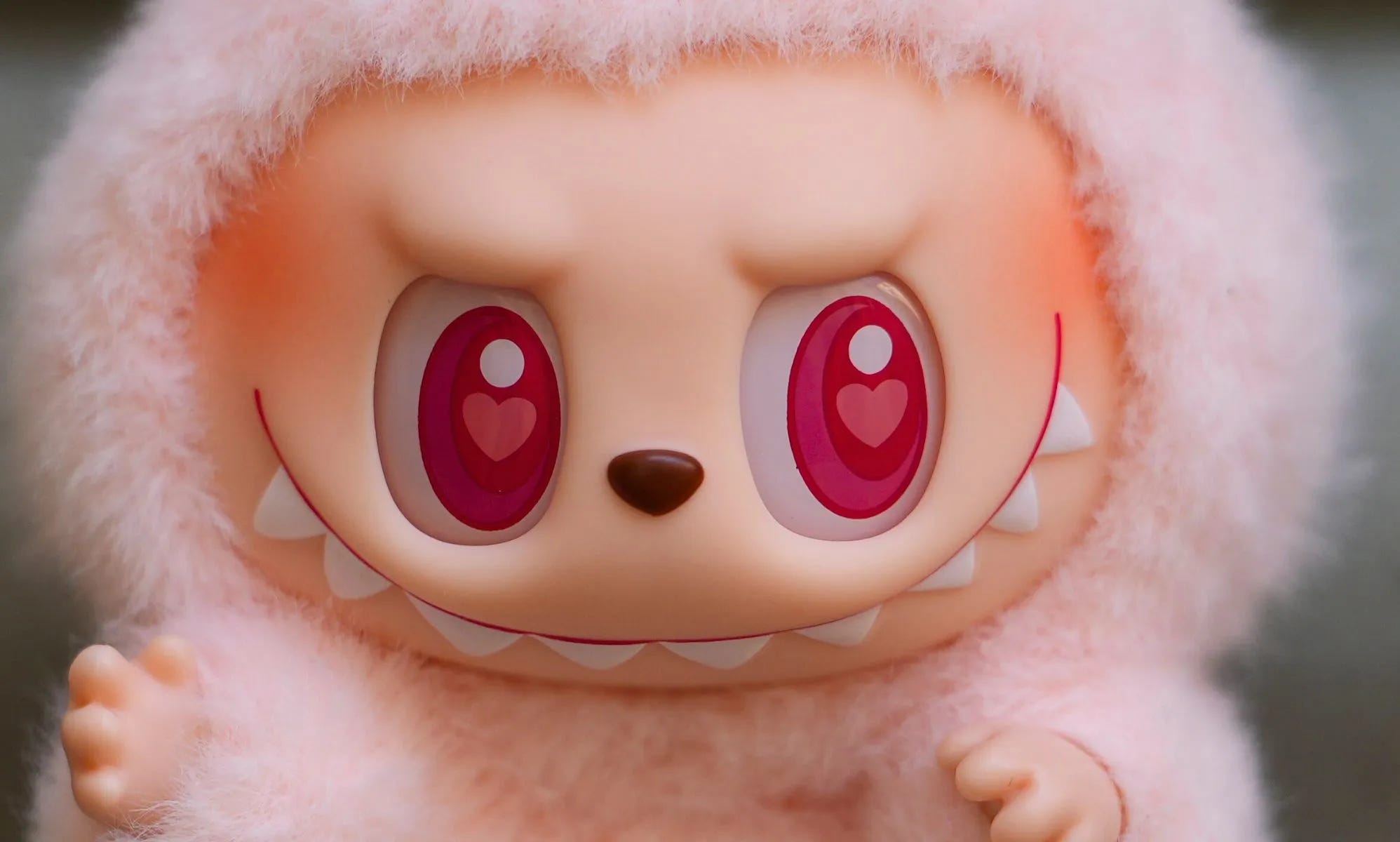
The Labubu maker would like everyone to know it sells other toys.
Pop Mart COO Si De told Bloomberg News in an interview published June 9, 2026 that concerns about the company being a one-hit wonder are overblown. His argument: Labubu’s explosive growth got so much attention that nobody noticed the rest of the catalog. Non-Labubu items accounted for about 50 percent of Pop Mart’s US revenue last year, a breakdown the company disclosed for the first time in the interview.
In Japan, South Korea, and Southeast Asia, non-Labubu characters already make up the majority of sales, Si De said.
The interview is damage control. And the damage has been measurable.
Pop Mart’s stock dropped 22.5 percent in March
Pop Mart reported its 2025 annual results in March 2026. The numbers were enormous. Revenue jumped 184.7 percent to 37.12 billion yuan (about $5.4 billion). Net profit surged 284.5 percent to 13.08 billion yuan.
The stock dropped 22.5 percent the same day. Biggest single-day drop since April 2025.
The problem was not the year. It was the shape of the year. Morningstar analyst Jeff Zhang explained the reaction: “We think Pop Mart’s 2025 revenue and earnings growth have likely missed the market’s consensus estimate, with material slowdown in the fourth quarter amplifying investors’ concern on the durability of top IPs.“
The fourth quarter slowed down hard. The 2026 guidance came in conservative. The dividend payout dropped from 35 percent to 25 percent. Investors read all three signals the same way: the Labubu wave has crested.
Labubu is 38 percent of Pop Mart’s revenue
The Monsters series, the Labubu-led character line, generated 14.16 billion yuan in 2025, up 365.7 percent year over year. That single line made up 38 percent of Pop Mart’s total revenue.
A toy company drawing more than a third of its revenue from one character family is exposed. Trends move fast in collectibles. The plush charm hanging off a Birkin bag in 2025 is the clearance bin item of 2027 unless the underlying brand has more going on.
Pop Mart knows this. The company sold over 400 million toys in 2025, with roughly a quarter tied to The Monsters series. The other three quarters came from a deep bench the company is now pushing hard.
Twinkle Twinkle and Crybaby are picking up the slack
The successor characters are showing real numbers.
Twinkle Twinkle, launched in late 2024, generated 390 million yuan globally in the first six months of 2025 and has become one of the company’s fastest-growing lines. The plush pendants routinely sell out within minutes of restocking. On the Chinese resale platform Qiandao, Twinkle Twinkle items trade above official retail.
Crybaby is doing the same. A plushie from the Crybaby Vacation Mode On series sells at 72 percent above retail on resale platforms.
Skullpanda ranks as Pop Mart’s number two character in the US market.
That is what a functioning hit factory looks like. Disney does not live on one character. Sanrio does not live on Hello Kitty alone (though it comes closer than it admits). Pop Mart is making the case that it belongs in that company.
Wrapping up the Labubu situation
Both things are true at once. Labubu mania has cooled from its 2025 peak, when UK stores suspended in-person sales over brawls and resale prices hit multiples of retail. And Pop Mart has more under the hood than the skeptics assumed.
The 2026 question is whether the successor characters can fill the gap fast enough. Labubu at its peak was a once-a-decade phenomenon, the kind of organic celebrity-driven craze (Rihanna, Dua Lipa, Lisa from Blackpink) that no company can manufacture on demand. Twinkle Twinkle and Crybaby are healthy product lines. They are not cultural moments.
For collectors, the cooldown has an upside. Labubu restocks actually stay in stock now. Resale premiums are compressing. The hobby is getting cheaper to participate in for the first time in two years.
For Pop Mart investors, the next two quarterly reports will show whether the diversification story holds. For everyone who bought a Labubu at triple retail in 2025: maybe hold onto the receipt.
Article compiled and edited by Derek Gibbs (theme park editor) and the Pirates and Princesses newsroom.
Pirates and Princesses is your destination for news, views, and rants on geek lifestyle, fandom, and pop culture. Visit us at piratesandprincesses.net for daily coverage of the things you love.
Hat Tips:
Bloomberg News (June 9, 2026), primary source for the Pop Mart COO Si De interview including the first-time disclosure that non-Labubu items accounted for about 50 percent of US revenue and the majority non-Labubu sales in Japan, South Korea, and Southeast Asia
South China Morning Post / Zhu Wenqian (March 2026), primary source for the 2025 annual results including the 184.7 percent revenue growth to 37.12 billion yuan, the 284.5 percent net profit surge, the 22.5 percent single-day share drop, the 38 percent Monsters revenue concentration, the dividend payout reduction from 35 to 25 percent, and the Morningstar analyst Jeff Zhang quote on fourth-quarter slowdown
Bloomberg / Japan Times / Bangkok Post (March 16, 2026), the post-Labubu diversification coverage including the 400 million toys sold in 2025, the Twinkle Twinkle 390 million yuan first-half performance, the Crybaby Vacation Mode On 72 percent resale premium, the Skullpanda US number two ranking, and the Qiandao resale platform data
CNN Business / Olivia Kemp (2025), the UK in-store sales suspension following brawls and crowd surges at Pop Mart locations
WWD (2025), the Labubu celebrity adoption context including Rihanna, Dua Lipa, Lisa from Blackpink, and the TikTok Shop US sales growth data