

Kevin Feige told Empire the MCU will release just four movies over the next three years to focus on quality over quantity. After seven of Marvel’s last thirteen films missed $500 million, slowing down looks less like a retreat and more like the obvious call.
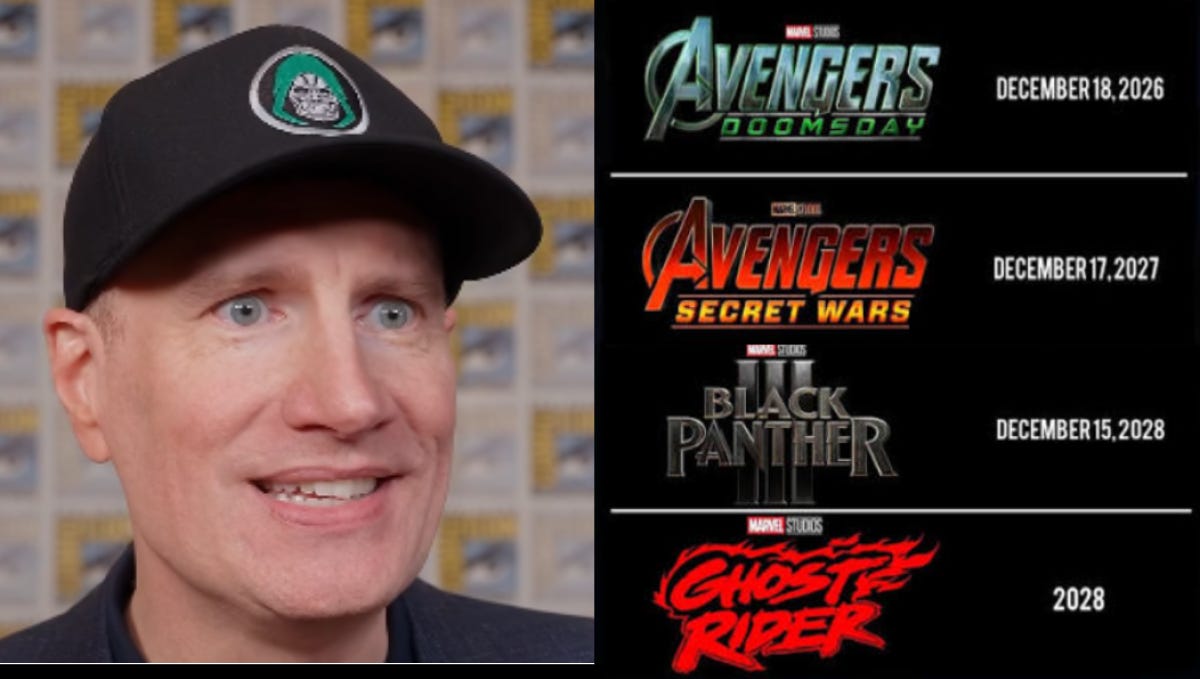
Kevin Feige wants to make fewer Marvel movies, and the box office numbers say he’s probably right.
The Marvel Studios president told Empire that the studio is deliberately slowing down. Just four MCU films are coming over the next three years, a sharp drop from the pace Marvel was keeping a few years ago.
“We always try to focus on quality, but when the quantity is so much, you get spread thin,” Feige said. “We didn’t want to be spread thin.”
For a studio that once pumped out three or four movies a year plus a stack of Disney+ shows, that’s a real change in direction. And it’s one that’s easy to defend once you look at how the recent movies actually did.
What Kevin Feige said about Marvel’s quality over quantity plan
Feige laid out the thin slate himself.
Avengers: Doomsday arrives in December 2026. Then Avengers: Secret Wars is the only MCU movie in all of 2027. After that, 2028 opens with Ghost Rider and Black Panther 3.
Four movies, three years. That’s it, at least among what’s been announced.
Feige framed the gap as intentional. He wants the two Avengers films to land as events, not as two more entries in a crowded calendar. “The Avengers are as important as it gets,” he told Empire, calling Secret Wars a setup for the entire future of the franchise.
This isn’t a brand-new idea from Marvel, either. Feige has been signaling a slowdown since 2024, and Disney CEO Bob Iger said on an earnings call that the company would cut Marvel down to two or three films a year, from the four it had been making.
Why Marvel’s box office numbers back up the slowdown
Here’s the part that turns a corporate talking point into a genuinely smart move.
During the Infinity Saga, the run of films that ended with Avengers: Endgame in 2019, Marvel almost never missed. Only three of those 22 movies failed to clear $500 million worldwide.
Since the pandemic, the math flipped hard. Seven of Marvel’s 13 post-Endgame films missed that same $500 million mark. That’s more than half.
Captain America: Brave New World and Thunderbolts both underwhelmed at the box office this year. The Marvels in 2023 became the lowest-grossing MCU movie ever. The misses stopped being the exception and started being the pattern.
So when Feige says the studio got spread too thin, the receipts are right there. Marvel was making more movies than it could make well, and audiences noticed the drop before the executives admitted it.
Marvel released too much content and fans felt it
The bigger problem wasn’t any single flop. It was the sheer volume.
By Feige’s own count, Marvel made about 50 hours of content between 2007 and 2019. In the six years after Endgame, it put out well over 100 hours, more than double the output in half the time. Add the animated shows and it’s around 127 hours.
“For the first time ever, quantity trumped quality,” Feige admitted last year.
A lot of that flood came from Disney+. When the streaming service launched, Marvel was pushed to fill it with shows, and suddenly keeping up with the MCU meant homework. Miss a series and you might miss a character who shows up in the next movie. That’s exhausting for casual fans, and casual fans are most of the audience.
That exhaustion has a name now, “superhero fatigue,” and it’s been blamed for soft turnouts across the genre, not just at Marvel. Whether the fatigue is about superheroes specifically or just about being asked to watch too much of one thing is debatable. Either way, the fix is the same: make less, and make it matter.
Will fewer Marvel movies actually work
Now the honest caveat, because this is a bet, not a guarantee.
Making fewer movies only helps if the movies are better. A slim slate of mediocre films is still a slim slate of mediocre films. The strategy buys Marvel time and focus, but it still has to land the Avengers movies and make Ghost Rider and Black Panther 3 count.
The scarcity should help, too. When there’s one Marvel movie instead of four, each one feels like an occasion again, the way Infinity War did. Absence is how you rebuild anticipation.
For Disney, a company cutting jobs across its studios this month, spending less on Marvel while trying to make each film better is about as clean a win-win as the strategy offers. Fewer swings, but harder ones.
Marvel spent five years proving that more isn’t better. Now it gets to find out if less actually is.
Article compiled with the help of the Pirates & Princesses newsroom.
Pirates and Princesses is your destination for Disney news, theme park updates, and the pop culture you love. From Disney cruises and travel tips to Disney fashion, food, collectibles, and movie news, PNP covers it all. Visit us at piratesandprincesses.net for daily coverage. Follow PNP on Facebook and Instagram, and listen to the Pirates & Princesses podcast on Apple Podcasts and YouTube.
Hat Tips:
Empire (July 2026), Feige’s quotes on focusing on quality, being spread thin, and the four-film slate through 2028
Variety (July 20, 2025), Feige’s “quantity trumped quality” admission and the 50-hours-versus-100-hours content figures
Bounding Into Comics and Popverse (July 2025), the seven-of-thirteen box office breakdown and the post-Endgame underperformers
SlashFilm (May 2024), Bob Iger’s earnings-call comments on reducing Marvel’s film and TV output
Kotaku (July 26, 2026), Zack Zwiezen’s write-up of the Empire interview and the four-films-in-three-years framing