

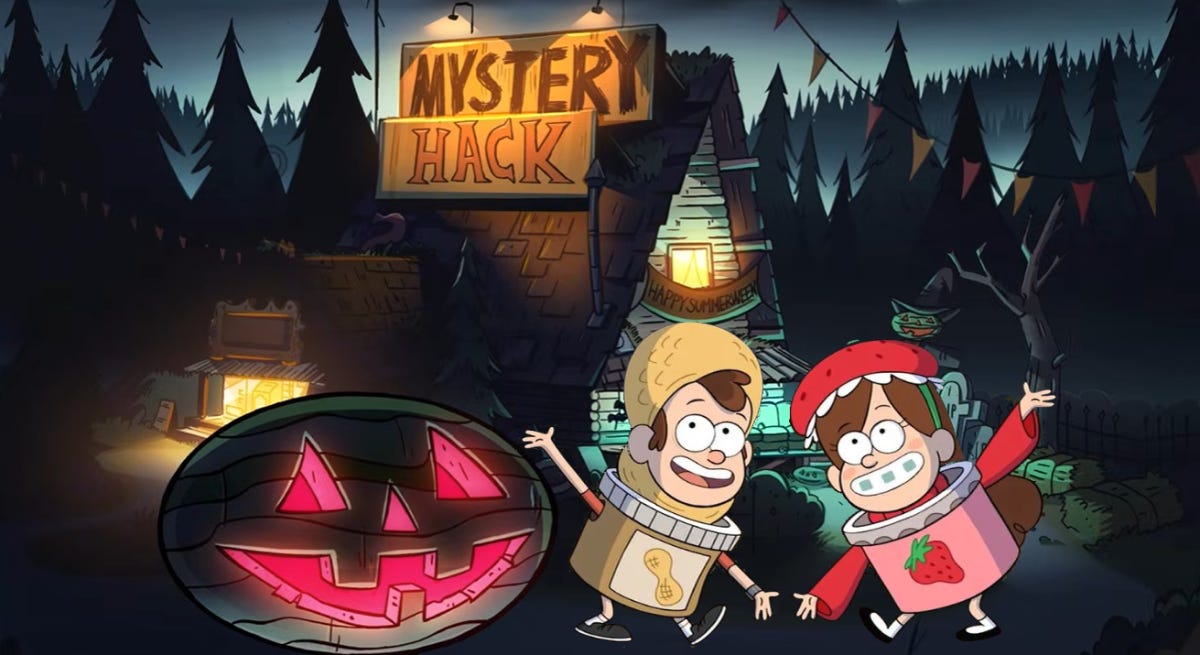
Ever seen “Summerween” decorations in stores in June and wondered what’s going on? The spooky-summer holiday started as a joke in a Disney Channel cartoon, and now Walmart, Michaels, and Spirit Halloween are all cashing in. Here’s the full story.
If you’ve spotted skeletons and jack-o’-lanterns for sale in the middle of summer and thought “wait, it’s not even close to October,” welcome to Summerween.
It’s the fast-growing trend of celebrating Halloween in the summertime, and it has a surprising origin: a beloved Disney Channel cartoon. Here’s where Summerween came from, how it became a real cultural moment, and why major retailers are now betting big on it.
It all started with Gravity Falls
Here’s the origin, and it’s pure Disney.
Summerween comes straight from Gravity Falls, the cult-favorite Disney Channel animated series created by Alex Hirsch. In the Season 1 episode literally titled “Summerween” (which aired way back on October 5, 2012), twins Dipper and Mabel discover that the quirky town of Gravity Falls, Oregon loves Halloween so much that the residents celebrate it twice a year.
Their summer version, “Summerween,” falls on June 22 and comes with its own charming twists. Since pumpkins aren’t ripe in summer, the townsfolk carve “jack-o’-melons” (watermelons) instead. There’s even a spooky mascot, the Summerween Trickster, a monster who supposedly eats kids who lack “Summerween spirit.”
It was meant as a bit of surreal, funny world-building. Instead, it accidentally invented a holiday.
How a cartoon joke became a real trend
Here’s how it jumped from the screen into real life.
For years, “Summerween” lived on as an inside joke among Gravity Falls fans. Then, as the show found new generations of viewers, the idea caught fire on social media, especially TikTok, where people loved the concept of not having to wait until fall for spooky-season fun.
The trend really took off between 2024 and 2025, and by 2026 it’s gone fully mainstream. Fans throw Summerween parties with watermelon jack-o’-lanterns, coffin-shaped ice cream sandwiches, poolside skeletons, and horror-movie marathons. It’s Halloween’s greatest hits, just with sunscreen and a tan.
Creator Alex Hirsch even leaned into it, releasing a special animatic to celebrate the holiday’s real-life June date.
Now the retailers are all-in
This is where it gets big, because where fans go, stores follow.
Summerween has become serious business, and major retailers are racing to cash in on early spooky-season spending:
Walmart jumped in with dedicated “Summer Frights” sections in around 1,000 stores, stocking affordable Halloween-in-summer goodies (mostly $1 to $10). The retailer even planned a DIY pumpkin-head figure to debut during its July deals event.
Michaels rolled out its first Halloween collections in mid-June, with more planned for July.
Home Depot started putting out early Halloween animatronics, part of a related “Halfway to Halloween” push.
Spirit Halloween got in on it too, dropping a line of Terrifier-branded Summerween products that quickly sold out.
Even Lego launched a “Summerween Home Décor” range.
You’ll also find themed merchandise popping up at stores like Marshall’s, and the shelves keep growing every year.
Why retailers love it
Here’s the business logic, and it’s smart.
Halloween is enormous business, Americans spent a projected $11.6 billion on it, according to the National Retail Federation. And shoppers increasingly don’t wait for fall: the share of people who start Halloween shopping before October jumped from 32% in 2014 to 47% in 2024.
Summerween gives retailers a perfect excuse to start selling spooky merchandise months early, capturing that eager-shopper money long before the leaves turn. For stores, a made-up summer Halloween isn’t silly, it’s a second selling season.
The bottom line
Summerween is a genuinely delightful example of fan culture shaping the real world. A throwaway joke in a 2012 Disney Channel cartoon somehow grew into a legitimate seasonal trend, complete with parties, traditions, and a full-blown retail push from the biggest stores in the country.
Whether you think summer Halloween is the best idea ever or you’d rather keep your spooky season in October, Summerween clearly isn’t going anywhere. So if you love Halloween and can’t stand waiting all year for it, grab a watermelon, carve yourself a jack-o’-melon, and celebrate early.
As the folks of Gravity Falls proved, there’s no rule that says you can only get spooky once a year.
Article compiled with the help of the Pirates & Princesses newsroom.
Pirates and Princesses is your destination for Disney news, theme park updates, and the pop culture you love. From Disney cruises and travel tips to Disney fashion, food, collectibles, and movie news, PNP covers it all. Visit us at piratesandprincesses.net for daily coverage. Follow PNP on Facebook and Instagram, and listen to the Pirates & Princesses podcast on Apple Podcasts and YouTube.
Hat Tips:
Wikipedia and the Gravity Falls Wiki (2026), verified for the Summerween origin (Gravity Falls Season 1 Episode 12, October 5, 2012 premiere on Disney Channel, creator Alex Hirsch), the in-show details (the June 22 canonical date, jack-o’-melons, the Summerween Trickster, Grunkle Stan’s “celebrate twice a year” explanation), and Hirsch’s June 2026 anniversary animatic
Axios (2025), verified for the retail rollout (Walmart’s “Summer Frights” in ~1,000 stores, the $1-$10 price range, the July DIY pumpkin-head debut, Michaels’ June/July Halloween collections, Spirit Halloween’s expansion), and the National Retail Federation figures ($11.6 billion in Halloween spending, the 32%-to-47% rise in pre-October shoppers)
InForum and The Game of Nerds (2026), verified for the mainstream/TikTok rise, the Summerween party traditions (watermelon jack-o’-lanterns, themed treats), the Home Depot and Spirit Halloween Terrifier details, and the merchandise availability at Walmart and Marshall’s