

There was a time, not that long ago, when shopping at Aldi carried a little stigma. It was the bare-bones discount store with the weird off-brand cereal, the quarter you needed to rent a cart, and the cashiers who scanned your groceries at light speed.
The knock was simple and a little snobby: Aldi was where you shopped if you couldn’t afford the “real” grocery store.
That reputation is dead. Today Aldi isn’t a thing people sheepishly admit to. It’s a thing people post about, obsessively, by the millions.
Somewhere along the way, the same crowd that plans Disney trips and orders seasonal Starbucks drinks adopted Aldi as one of its own. So how did the budget store become a lifestyle brand?
The Aisle of Shame built a cult
If you want to understand Aldi’s glow-up, start in the middle of the store.
That center lane of rotating, limited-time, non-grocery stuff, officially called “Aldi Finds,” has been lovingly renamed by fans as the “Aisle of Shame.” The name is a self-deprecating joke about walking in for milk and bananas and walking out with a salt lamp, a countertop pizza oven, a llama-shaped pool float, and a pair of $13 sneakers you didn’t know you needed.
The stock changes every week, usually on Wednesdays, and once an item sells out, it’s gone. That scarcity turned shopping into a sport. There are haul videos, restock alerts, and a TikTok hashtag tracking the latest weird treasures.
And then there’s the Facebook group. The “original ALDI Aisle of Shame Community” has more than 3 million members who post hauls, swap recipes, review products, and confess their impulse buys. There’s evolved lingo and inside jokes, including fans who’ll let out a “caw-caw” in-store to see if a fellow member calls back. It is, no exaggeration, a genuine subculture built around a discount grocery chain.
The class stigma flipped into a flex
Here’s the cultural turn that makes Aldi interesting.
The old shame, store-brand food means you’re broke, got rebranded into a virtue: store-brand food means you’re smart. In an era of brutal grocery inflation, paying less for a private-label product that’s often just as good stopped being embarrassing and started being a brag. Research has found Aldi can run as much as 15% cheaper than Walmart in some markets, and people who used to hide their Aldi bags now make content about their savings.
Being thrifty became aspirational. The same way couponing had a cultural moment, “I get everything at Aldi and it’s just as good” became a flex, not a confession. The store didn’t necessarily change who it was. The culture changed how it felt about people who shop smart.
It started selling fancier stuff, too
Part of the glow-up is that Aldi quietly climbed up-market to meet its new fans.
Alongside the rock-bottom basics, the chain has leaned into premium and specialty offerings, the organic produce, the fancy cheeses, the gourmet-leaning snacks and seasonal treats, that put it in closer competition with stores like Whole Foods and Publix. It’s the kind of stuff that makes a cart feel a little boujee without the boujee receipt.
What’s smart is that the upgrade didn’t torch the foundation. The everyday staples are still priced about as reasonably as you can hope for in an inflation-soaked economy.
So a shopper gets the best of both: cheap reliable basics for the weekly run, plus enough elevated options to feel like they’re treating themselves. That combination is exactly what pulled in a more aspirational customer without scaring off the budget-first loyalist.
Aldi, Disney, and Starbucks: the same Venn diagram
There’s a real overlap in the fanbases here, and it’s not a coincidence.
The crowd that’s deeply into Disney parks, that treats a Starbucks seasonal cup as an event, tends to value the same things: a reliable little hit of joy, a sense of community around a brand, the thrill of limited-edition drops, and an experience you can photograph and share.
Aldi’s Aisle of Shame scratches the exact same itch as a Disney merch release or a fall Starbucks menu. It’s affordable, it’s seasonal, it’s here-today-gone-tomorrow, and it gives you something to post.
These brands all turned ordinary consumer habits, groceries, coffee, a theme-park trip, into identity and community. Once you see the overlap, you can’t unsee it.
When Aldi and Disney literally teamed up
And the Disney connection isn’t just a vibe. It’s gotten official.
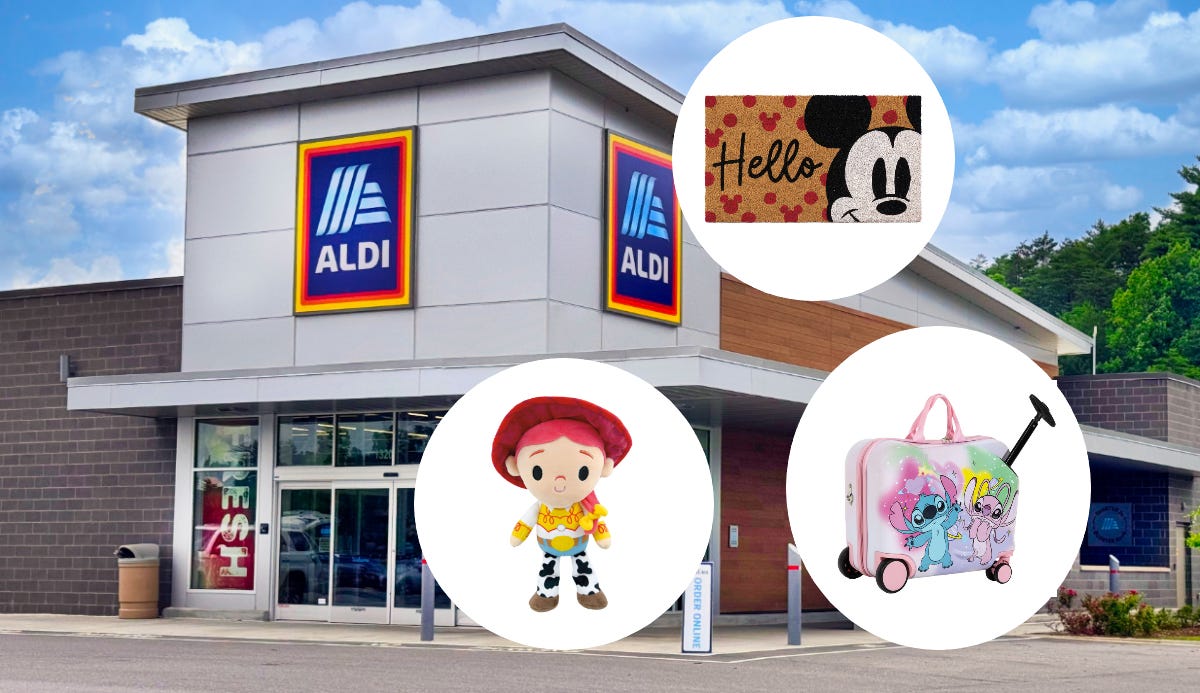
Aldi has repeatedly dropped collections of licensed Disney merchandise in the Aisle of Shame, and they go fast. In spring 2025, the store rolled out more than 70 Disney-themed products, priced roughly $4.99 to $14.99: Mickey ears, character baseball caps, ceramic planters, water bottles, and Loungefly-style mini backpacks that fans noted looked almost identical to the pricey ones sold in the parks. The mouse-ear headbands were nearly indistinguishable from the official park version, at a fraction of the cost.
It’s become a recurring thing. There was a Disney Christmas line in late 2024 with snow globes and a buildable Disney village, and fresh Disney summer drops in 2026 with character travel sets and water bottles. Shoppers report showing up at store opening to crowds already picking through the Mickey gear, with most of it gone the same day.
For the Disney-obsessed parent, this is the dream overlap: a chance to get officially licensed Disney stuff for the kids, or for a park trip, without paying park prices. Aldi basically built a bridge straight into the Disney fandom, and the fandom walked right across it.
What Aldi figured out
Aldi’s transformation comes down to understanding something most grocery stores never cracked.
People don’t just want cheap food. They want to feel clever for the deal, they want the little dopamine hit of a surprise find, and they want to belong to something. Aldi turned a discount grocery run into a treasure hunt with a community attached, then handed that community seasonal, limited, Instagrammable drops, sometimes with Mickey Mouse on them, and gave them a few fancier options so the whole trip felt like an upgrade.
The store that people once quietly apologized for is now one people proudly build part of their identity around. Same quarter for the cart. Same fast cashiers. The staples are still cheap. The only thing that really changed is that being smart with money stopped being a secret and started being the whole point.
So no, you’re not imagining the Aldi takeover of your feed. The poor-people’s-store joke didn’t just age badly. It got proven completely backward.
Article compiled and edited by Derek Gibbs (theme park editor) and the Pirates and Princesses newsroom.
Pirates and Princesses is your destination for news, views, and rants on geek lifestyle, fandom, and pop culture. Visit us at piratesandprincesses.net for daily coverage of the things you love.
Hat Tips:
The Daily Meal and Atlas Obscura (2023-2024), verified for the 3-million-member Aisle of Shame Facebook community, the “caw-caw” fan lingo, and the cult-following culture
The Kitchn and CNN via AOL (2024-2025), verified for the Aldi Finds weekly-Wednesday rotation, the up-to-15%-cheaper-than-Walmart figure, and the store-growth numbers
Yahoo/SheKnows and Cheapism (2025-2026), verified for the 70-plus Disney product drop, the $4.99–$14.99 pricing, and the Mickey-ears and backpack details
Aldi Reviewer (2024-2025), verified for the licensed-Disney-merch confirmation, the Loungefly-style backpacks, the park-identical mouse ears, and the in-store opening-day crowds
Disney Food Blog (April 2026), verified for the 2026 Disney summer collection, the character water bottles, and the travel sets
Glass Almanac (June 2025), verified for the Aisle of Shame’s social-media explosion and the limited-edition product strategy